I doubt many, if any, readers of this piece will have heard before of the writer, Susan Miles (1887-1975), despite the fact that, for some sixty years, she was a respected literary figure. Her output comprised over half-a-dozen books of poetry, the earlier collections achieving some notoriety for their use of free verse, a couple of well-regarded compendiums of literature concerning childhood and youth, a biography of her husband, a vicar with a strong social conscience, and some unusual novels – one in three parts with the second part written as a play in verse – and her final one written wholly in verse. Accordingly, she liked to challenge conventions.
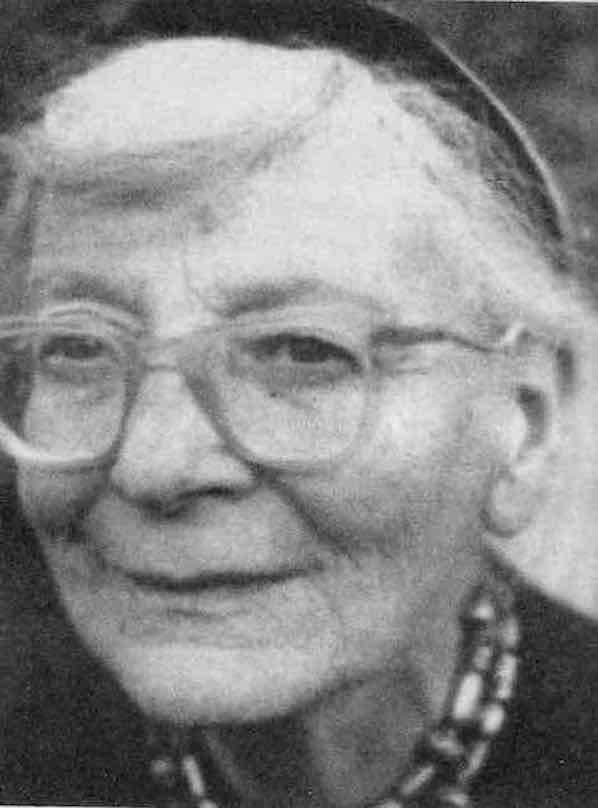
Furthermore, she and her husband were strong supporters of the suffragette movement, were ardent pacifists and social reformers and lived an extraordinary life, offering support, often in their own home, to unmarried mothers, prostitutes with venereal disease, Belgian and Jewish refugees and Italian prisoners of war amongst others. Their circle of acquaintances, particularly whilst her husband was Vicar of St George’s, Bloomsbury, included Emperor Haile Selassie as well as some well-known literary figures, such as T.S.Eliot, Susan Stebbing and John Collings Squire. They were a fascinating couple.
My own interest derives from the fact that she was a distant relation and I met her on a few occasions in an Oxford restaurant in the last couple of years of her life – meetings which despite now being over fifty years ago have left a lasting impression on me. Susan Miles was a pseudonym. She was born Ursula Wyllie and was the youngest child of Emily Wyllie (née Titcomb), a sister of my great-grandfather, the artist, William Titcomb, and, seemingly, his favourite niece. She was accordingly a cousin of Titcomb’s daughter, Loveday (my grandmother), who selected her as one of my mother’s godparents, and she was always referred to in our family as Cousin Ursula.
Like many of my generation – born in the mid-twentieth century – whose grandparents had come from enormous families, my early years seemed full of unwelcome visits to aged ‘aunts’. Incarcerated in nursing homes across the country, these relics of the Victorian age, dressed all in black and often sporting beards that, in equal measure, fascinated and repelled as one proferred the demanded peck on the cheek, sat in dark, musty rooms, lonely, forgetful and confused. Their earlier achievements – in fact, all vestiges of their former lives were invisible to a youngster who, having been duly paraded, was expected neither to be seen nor heard. Accordingly, my mother’s request, upon my going up to Oxford University, that I should visit her aged godmother and distant relative, Cousin Ursula, who was in a nearby home, was not received with much grace and, as I explored the new found freedoms of being away from home, I put off the fulfilment of this irksome duty until, with the end of the first year rapidly approaching, I could not face further censure. On ringing the nursing home, I was moderately encouraged that Cousin Ursula immediately announced that I should not go to the home itself as it was “full of old crocks” but that we should meet in an Italian restaurant. Nevertheless, as I cycled off for our Sunday lunchtime rendezvous, with a throbbing head from the previous night’s excesses, I was not sure that this was really a profitable way of increasing my student’s overdraft. However, within minutes of seating myself down opposite her, we were chatting away like we had known each other for years. She had a natural instinct for knowing the sort of concerns – girls, drugs, drink etc – that I would be having at that stage of my life, and she was prepared to talk about such issues in an open way that I had never experienced before. As a Rector’s wife, I had expected her to be terribly prim and pious, but she had a wicked sense of humour and shocked me by announcing that she had rather enjoyed smoking opium out in India.1 She might have enquired about my views on religion, but appeared unperturbed by my complete disinterest. The time slipped by so quickly, and we were soon making arrangements to meet again the following term. Such meetings were no longer a duty but became a pleasure and well worth the ribaldry received from my peers as to the age of the only female I managed to date regularly during my University career! I was amazed to be told by my mother during one holiday that Cousin Ursula had just published another book but she waved away my enquiries and refused to elaborate on her literary output.2 So often does one look back on such acquaintances and kick oneself for failing to recognise the treasure that a few persistent questions would have elicited – and so when I was contacted early this century by Persephone Books, a publisher specializing in female authors, as they wanted to issue a reprint of her extraordinary novel in verse, Lettice Dulmer (1958), I found myself trying to establish details of her literary career without any first-hand knowledge, other than the works themselves and my memory of an unconventional old woman, full of fun and worldly wise, yet non-judgmental despite her own strong faith.

The best source for Ursula’s life is Portrait of a Parson, her biography of her husband, the Reverend William Corbett Roberts (1873-1953), published in 1955, albeit she is quite reticent about her own activities (her literary output not even gaining a mention) and makes unflattering comments about her own personality, particularly when newly married.
Ursula was the eighth and youngest child of Lt.-Col. Robert Wyllie and his wife, Emily, who was a daughter of Bishop Titcomb of Rangoon. Known in the family as ‘Dollie’, she was born on 4th December 1887 in India, where her parents had been stationed since their marriage in 1872. Earlier that year, William Titcomb exhibited a painting at the Royal Academy entitled That’s Where Pa Is, showing some of her siblings looking at a globe in a well-appointed nursery to see where their father was now stationed. However, the birth of another child seems to have persuaded her mother to return to England permanently and Ursula was brought up initially in Windsor and then in Highgate. She was probably educated privately and her tutor for one year was her elder sister, Gladys (1880-1942), with whom she got on very well. She often accompanied Gladys, who was studying art, to the National Gallery, where they copied Turner’s watercolours. In 1906, the family moved again to Redhill. It was while she was staying in Dusseldorf in 1908 with her uncle, William Titcomb, that she first met her future husband, William Roberts. The match seemed unlikely. He had developed socialist and pacifist leanings while at Oxford and now at the age of 35 was the Principal of the Dorchester Missionary Training College, a position where celibacy was expected, whilst her father, being a retired colonel, was an ardent Conservative, and she herself, some 13 years younger than her husband, had rejected religion. Finding her initially rather formal and conventional, it took Roberts two days to break down her stiffness but within two weeks, he realised he was in love, whilst friends noticed that his rather aloof reserve had been transformed into a radiant bonhomie. They were married seven months later at St Katherine’s Church, Merstham, Surrey on 13th February 1909.
Roberts’ natural bent would have been towards Mission work but, in Ursula’s own words, “with a wife still doubtful of every step towards the Altar”, he felt “that he should content himself for a few years in a parish where he would be able the better to combine the vocation of husband – and, he hoped, father – with that of priest”.3 Accordingly, he accepted the living in the village of Crick in Northamptonshire, but they were both unprepared for such a task. Roberts was not used to country ways and was ignorant of the land, a stumbling block when there was 550 acres of glebe. He was also, according to Ursula, “hampered by an oversensitive, shy, ignorant, child-wife, with a conscience that drove her, against the trend of her natural inclinations, into activities that inevitably made for trouble”.4 The villagers were not used to the couple’s liberal views and outrage was caused by the fact that they allowed their servants not only to work capless but also to join them for Sunday night supper. Worse still, the Rector’s wife was often seen out hatless and had been spotted selling copies of Votes for Women on the streets of Rugby. Both William and Ursula campaigned with the Women’s Suffrage Societies, and, under her own name, Ursula wrote a pamphlet The Cause of Purity and Women’s Suffrage which was published by the Church League for Women’s Suffrage in 1912. Leading advocates of the causes closest to their hearts at this juncture – socialism, feminism and pacifism – were invited to talk to local groups to stir up social consciences. Probably as a result, when War broke out, their pacifist views, whilst not approved, were respected and they were not subjected to the abuse that many similar minded people suffered.
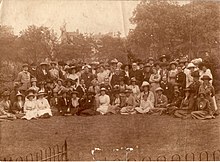
The enormous Rectory at Crick was made into a welcome retreat for all manner of visitors. Holidays were provided for disadvantaged children through the Children’s Country Holiday Fund – as many as five at a time -, students from poor homes at the Dorchester Training College came to study during holidays and children from Poplar were housed and fed when the dockers went on strike. On the outbreak of War, it became home to a family of Belgian refugees. The house could as easily contain females in distress as esteemed scholars and missionaries; tramps were as welcome as social reformers and suffragettes. There were those who stayed for months, some even for years. Friends and relatives also came freely and Sunday night supper in the kitchen became an institution, whatever type of visitor was staying. “The evenings were usually spent in reading aloud: much Ibsen and Shaw, and a great deal of poetry, old and new. Chesterton, Belloc, W.H.Davies, and the early poems of T.S.Eliot, were read and re-read.”5
This confirms Ursula’s interest in poetry and the early influences upon her work. In fact, one wonders whether the early literary and artistic efforts of Lettice Delmer, a character in her final novel, do not match Ursula’s. Lettice first goes to London so that she can mix with the art scene but “her wishy-washy water-colour daubs” are not hung, her “little reedy voice” is laughable and she is advised not to dissipate her energies but to concentrate on her poems, her best talent, although these too are later rejected. Perhaps, Ursula’s trip to Dusseldorf to visit her uncle was motivated by a desire to study with an artist then at the height of his fame. Certainly, she appears to have displayed, whilst there, some artistic sensibility for she received from Titcomb as a wedding present an important oil depicting the St Martin’s Day Procession in Dusseldorf, completed shortly before her visit. However, art was soon abandoned in favour of literature and it is during her time at Crick that Ursula started to write amusing poems based on her experiences as a parson’s wife, feeling it sensible, to avoid offence, to adopt the pseudonym Susan Miles. Some of these were accepted for The New Statesman and a number were published in 1918 as Dunch, the name she had bestowed on Crick. Written predominantly in free verse, the Aberdeen Press and Journal commented, “Dunch is assuredly not poetry, but it is piquant, alive, diverting”.6 The collection was sufficiently significant to earn her a reasonably positive mention in Harold Monro’s often unforgiving Some Contemporary Poets (1920). Certainly, I find many most amusing, particularly A Reaction, which lists numerous aspects of the life of a parson’s wife that she found trying, such as inane conversations, petty jealousies, scurrilous sniping, slovenly mothers, unruly children and back-biting neighbours. Here are some extracts
I do not want to discuss the price of flannelette with the doctor’s wife. I do not care whether flannelette costs fivepence three farthings Or fivepence halfpenny…
I do not want to prepare the minutes
Of the Dunch Debating Society…
I do not know how to represent in black and white
The attempts of Mr Hudson
To worm his way on to the Committee,
Nor the determination of Mr Reynolds
To keep him off.
It is impossible to give the essence of the controversy Without allusion to Mrs Reynolds,
Yet Mrs Reynolds contributed nothing visible to the discussion Save glares,
And glares cannot be committed to the pages
Of a minute book…
I do not want to visit Mrs Hopps
And her ninth new baby;
As likely as not there will be a flea on the bed Or a piece of cold potato…
I do not want to visit the butcher’s wife
She is aggrieved
Because I asked her to tea with her next-door neighbour, Who is nobody;
Whereas she, the butcher’s wife,
Had an uncle, to whose memory
A tablet was erected
In the chancel of his parish church…
I do not want to visit the churchwarden’s wife.
She will use her saw-like voice on me and will deplore the fact That I “don’t visit”.
She will tell me that I should make “quite a nice little parson’s wife” If only I would give up all that silly nonsense about the Vote And turn my thoughts to duties
That lie near home.”
The book was dedicated to her mother, who had died the previous year, and some verses throw a little light on her childhood. She mentions sad separations from her mother, her inability to get her father to respond to any of her schemes for enlivening the day other than with a disinterested grunt, the tyranny of nurses, her way of “enduring” the death of a brother (killed in action in Burma in 1904), and her pride at another brother being ‘Mentioned in despatches’, albeit he too did not survive WW1.
It was perhaps inevitable, given the causes that Ursula and her husband espoused, that sooner or later life in a small country village would pall (“too full of ducks and grass” was Lettice Delmer’s description) and, in 1917, Roberts accepted the Crown living of St George’s, Bloomsbury, despite its smaller stipend. Most of the homes that had previously housed the Church’s congregation had been converted to boarding houses and hotels and the new Rector was faced with trying to revive its fortunes, which he did by drawing in people with similar socialist views. Roberts was a man of great intellect, who thought deeply not only about theological matters but also about the issues of the time. He cut a rather unconventional figure, to whom intellectuals and missionaries were drawn, and yet he provided solace to many fallen on hard times, particularly women, not caring when dealing with such “fellow sinners” whether he might appear naive and far too trusting.7 When in 1930, a Bicentenary Fund was established for church restorations, T.S.Eliot, J.C.Squire, L.S.Stebbing, Laurence Binyon, Middleton Murry, Helen Waddell, Harold Munro and Herbert Palmer – many of them parishioners – gave their services as lecturers. He had an astonishing gift for fusing together disparate elements of his congregation, once inviting two people to tea, as one had stolen the other’s handbag. Ursula, as at Crick, shared her home not only with intellectuals but also with waifs and strays. One prostitute, given a room for several weeks, stole all her silver wedding presents and then teased her husband for looking like Father Christmas as he toiled back to Woburn Square after their visit to many scattered pawn shops. Roberts also took on the chaplaincy of a Hospital for women with venereal disease and Ursula’s visits with him to this hospital, where many inmates were “pathetic victims of other people’s lust”, provided much material subsequently for her last novel, Lettice Delmer.8

During their time in Bloomsbury, Ursula had a variety of literary projects. She published several further compilations of her poetry – Annotations (Humphrey Milford, Oxford University Press, 1922), Little Mirrors and Other Studies in Free Verse (Basil Blackwell, 1924) and The Hares and Other Poems (Elkin Mathews, 1924) and was represented in Joan Beauchamp’s compilation Poems of Revolt (Labour Publishing Company, 1924). Whilst there were occasional references to the striking free verse contained therein, they do not appear to have attracted much attention and she acknowledged that most reviewers felt that her free verse was merely prose chopped into lines in a purely arbitrary way.9 Whilst this may sometimes appear to be the case, there is no denying, as illustrated by the short extracts quoted from Dunch above, that placing a phrase on a separate line can give it additional weight.
In 1923, she also edited an Anthology of Childhood in Verse and Prose, which sought to bring together “those passages of English literature from the 14th to the 20th centuries which deal most happily with children and with childhood”. This was highly regarded, with the Daily News commenting that it was “so good that it can hardly fail to be a classic in this type of literature”.10 As a result, she was asked to follow this, in 1925, with a similar anthology dedicated to Youth. Given that the selection and arrangement of pieces was made by herself, these works suggest that Ursula was extremely widely read for her age – the latter, for instance, containing over 170 extracts from widely divergent sources.11 Such an interest in childhood and youth indicates that motherhood would have been welcomed but much to their joint regret, however, there were no children of the marriage. Summing up the situation later, Ursula commented, “Hope had not completely failed until it seemed too late to adopt children”.12 Yet, throughout their marriage, they made homes for other people’s children for extended periods of time.
Ursula’s next major literary project, after a break of some years, was her first novel, Blind Men Crossing a Bridge, which was published in 1934. The title refers to Zen beliefs about crossing over to enlightenment, and the story recorded a family saga playing out over several generations. This received quite a bit of attention and a number of laudatory comments, but not unqualified praise. For some it was “a powerful and impressive novel”, “an extremely good book, even a brilliant one”, which “bore signs of genius”. John O’London’s Weekly opined that it was “a book which everyone must read. The beauty of its descriptions alone entitle it to a place in English literature.”13 However, it was very long – nearly 250,000 words – and extended sections were in dialect or used archaic words. Not everyone had the patience to finish it.
In 1938, failing health meant that life at St George’s had become too much for her husband and they moved to Sutton in Bedfordshire, where they lived in a large Elizabethan Rectory. Soon this became home to a group of Jewish refugees fleeing from the Nazis and during the blitz, it housed between 10 and 17 people. Three families with children were sheltered for long stretches and there were also four old people, two school-teachers and a lone, pathetic two year old. Favourite, though, was the young son of the housekeeper, who for 8 years was like a surrogate grandchild. Italian prisoners of war were made welcome in the grounds. Ursula herself enjoyed parish life much more than at Crick, where she felt that her youth and temperament had interfered. She continued with her writing and, in 1943, published Rabboni, a strange novel that draws on her own personal experiences, whilst adopting an unusual format. The novel is divided into three parts, with the first and third parts set in a Welsh valley, clearly based on her experiences in the Llanthony valley, where for many years she and her husband had a holiday home. This was very dear to them and was also used occasionally for extended periods of time when her husband was recuperating from one of his illnesses. The central part of the book, however, is written as a play, with the dialogue often repetitive and in rhyme. This is set in London and describes the antics of “a now pathetic, now ludicrous medley of pacifists and young communists attempting to run a Peace Week”14. Peace Teas were a regular feature of life at St George’s and the Roberts had become intimately involved with Haile Selassie, when he was in exile in Prince’s Gardens. It seems, however, that Ursula did not approve of the antics of the new breed of young pacifists. The title of the work, Rabboni, is significant, as the same word is the last utterance of Lettice Delmer. It is the term, meaning Master, used by Mary Magdelene on recognising Jesus when he appears to her by the Tomb.15
After the war, intending to wind down, Ursula’s husband moved to Hitchin to carry on work in a favoured area, Moral Welfare, but the illness of the local vicar meant that, for over a year, he, in effect, had another parish to run. Thereafter, his health, which had never been strong, deteriorated and he needed nursing for a long period before his death in January 1953. My aunt Elizabeth, a nurse, who helped during this period, recalls being perpetually cold and hungry, as funds were not in great supply. Ursula, she considered, was “rather scruffy”, rarely bothering to wash her hair. Her husband’s death will not have aided her financial position and she was to struggle financially for the rest of her life. Freed though from the maintenance of a large household and supporting her revered but impractical husband, she was free to write without all the interruptions that must have dogged most of her life. Having completed her husband’s biography, which will have caused her to assess not only their joint lives but those of many who had passed through their doors, she turned her attention to that most unusual of formats, a novel written in verse – Lettice Delmer. It was to prove one of her finest achievements.
Lettice Delmer, which features a hospital for women with venereal disease and an upper class mother and daughter who seek to help the inmates, was first published three years later in 1958 and many of the scenes and characters have strong resonances of real life situations referred to in her biography of her husband. The novel opens with Mrs Delmer visiting the Special Hospital for women with venereal disease. She is the wife of the doctor attached to the Hospital and fears that passers by seeing her enter will construe her as a relative of a patient or, worse still, a new admission. The porter makes it clear that this is no place for a lady such as her and her courage nearly fails. The Matron warns her not to shake an inmate’s hand and the inmates themselves do not welcome her. Her instinctive comment about the weather goes down badly as the girls cannot see out; her gift of flowers is useless – there is no vase to put them in – , but amidst the forlorn and pitiful group, she eventually locates Flora Tort (wronged flower), the parlour-maid, fallen on hard times, that her husband has suggested might be suitable for their household. It is difficult not to conclude that this is a visit that the author herself has made. As chaplain to such a Hospital, William Roberts befriended many inmates, setting them back on the road to recovery, and several became friends for life. Was one of their maids drawn accordingly from this source? Was Ursula, like Mrs Delmer, initially unsure about the concept, until her faith made her banish such thoughts as unworthy? Was her visit and subsequent approval of his plan welcomed by her husband with equal “pride and astonishment and twinkling mirth”?

Just as Lois and Rendell Delmer may reflect the author and her husband, so Flora Tort, and her son, Derrick, born from a liaison with a former employer, are likely to be based on characters that may well have lived in the Roberts household itself. Derrick’s initial surliness, the bed-wetting, the pilfering, the tantrums, the biting may well have been personal experiences for Ursula leading to considerable pride when he subsequently developed into a fine youngster. Another character in the novel, Helen Cordell, who rescues Lettice after her suicide attempt, will in all probability be based on the Moral Welfare Worker at the Hospital that the Robertses also befriended. Ursula records that this woman was both amused and somewhat exasperated by William Roberts, who persisted in describing an inmate who had had half a dozen babies by almost as many men as “a good girl, really.” Unsurprisingly, faith, or more often its absence or loss, is a frequent backdrop but great humanity and understanding is ever present where characters struggle to believe in any higher being. Nevertheless, Lettice Delmer’s journey towards reaching final peace with her God is an important element in the novel and results in her tragedy ending on a positive note.
The book received some significant endorsements at the time. Storm Jameson commented, “Its simplicities are at a profound level. The theme is a great one and the characters superb”, whilst Rayner Heppenstall said, “I am impressed by the originality and utter genuineness of this novel in verse. It is a form which has gone far too long untried.” Upon its re-publication in 2002, The Tablet commented,
“An extraordinary novel… I was hooked as soon as I began reading it. Susan Miles writes with such intensity that her protagonist’s unlikely pilgrimage from pampered under-occupied daughter of the upper middle class to humble, discerning attendant in a ladies’ lavatory is absorbing and entirely believable throughout… The terrible hospital for venereal diseases where Mrs Delmer pays brave, bright little visits is brilliantly described. So are the doomed but heartfelt attempts of Lettice and her mother to heal the lives of unfortunates they have rescued… a remarkable discovery.”
In 1962, there was renewed publication activity with three separate books of poetry – A Morsel of Gold and other studies, Epigrams and Jingles and Rainbows and other verses. Her final work was Fort Concho in 1877, published in 1973.
One of my cherished possessions has always been a set of Newlyn repousse copperware, which was given to William Titcomb on his marriage in 1892 by his fellow Cornish artists. As Ursula and William Roberts remained on close and friendly terms with the Titcombs, with ‘Uncle Bill’ presiding at all family christenings, weddings and funerals, Titcomb’s widow, Jessie, left the set to Ursula and she, in turn, bequeathed it to her goddaughter, my mother. Each time I clean it, therefore, I remember all those whose hands it has passed through and now, instead of my rubbing conjuring up only a vision of a fascinating old lady who had a love of zabaglione, I will recall a life devoted to both literature and to her God and a person who must have nourished the souls of many, not only in her ever-crowded household but through her writing, which was always thoughtful, often adventurous and seldom dull. Most of her output can be found on www.abebooks.com if I have at all piqued your interest.
NOTES:
1 Ursula and her husband spent six months at St Stephens College, Delhi in 1914, a period that they enjoyed immensely, and they would have moved to India had it not been for concerns about Ursula’s health in such a climate. Their stay, however, left them keen advocates of Indian emancipation and they involved themselves with Indian causes for the rest of their lives.
2 This was the intriguingly entitled Fort Concho in 1877, published in 1973.
3 Susan Miles, Portrait of A Parson, London, 1955 p.28
4 ibid p.28
5 ibid p.35
6 Aberdeen Press and Journal, 23/12/1919, at p.7.
7 A close friend once commented, “To my mind you are an explorer without a goal – a new Ulysses voyaging into unknown seas – eager to see and know, but reckless as to the direction, whither the tides will wash you down.” Susan Miles, Portrait of A Parson, London, 1955 p.52.
8 Susan Miles, Portrait of A Parson, London, 1955 p.65
9 The publicity for Annotations, which recorded in free verse things seen and heard in London, contained the author’s comment, “After thirty, one merely annotates and the book’s called Life”. See also Chopped Verse, Daily News, 21/10/1924, at p.10.
10 Daily News, 4/1/1924, at p.7.
11 She was also not afraid to berate A.E.Houseman for refusing to give permission for reproduction of his work, to blame the exorbitant fees of the representatives of some young poets for their enforced omission and to refer to the “horrid books” of Jane Austen.
12 Susan Miles, Portrait of A Parson, London, 1955 p.79
13 See advert in The Scotsman, 8/11/1934, at p.13.
14 Extract from Dustjacket,
15 St John’s Gospel, Chapter 20, Verse 16.