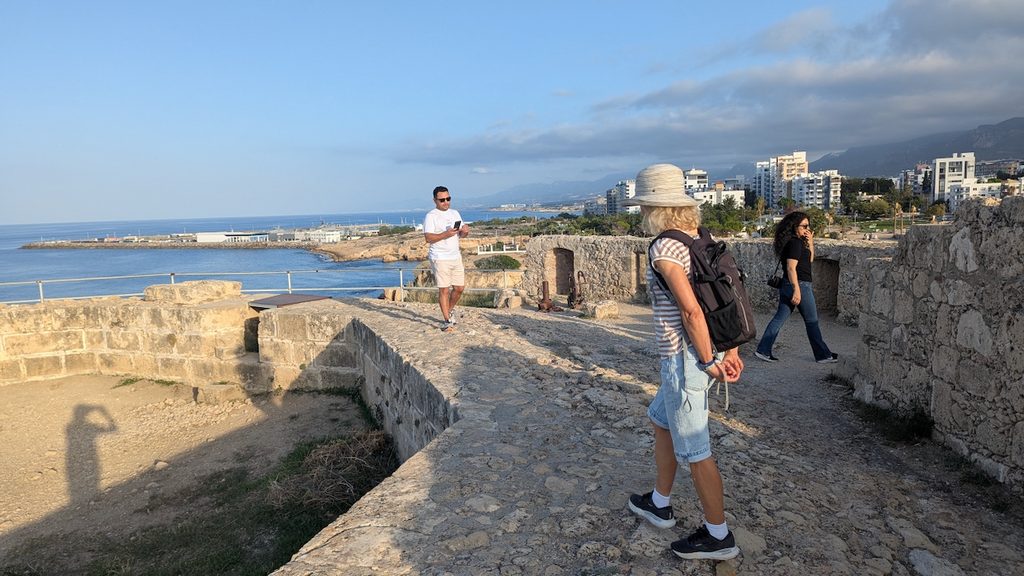
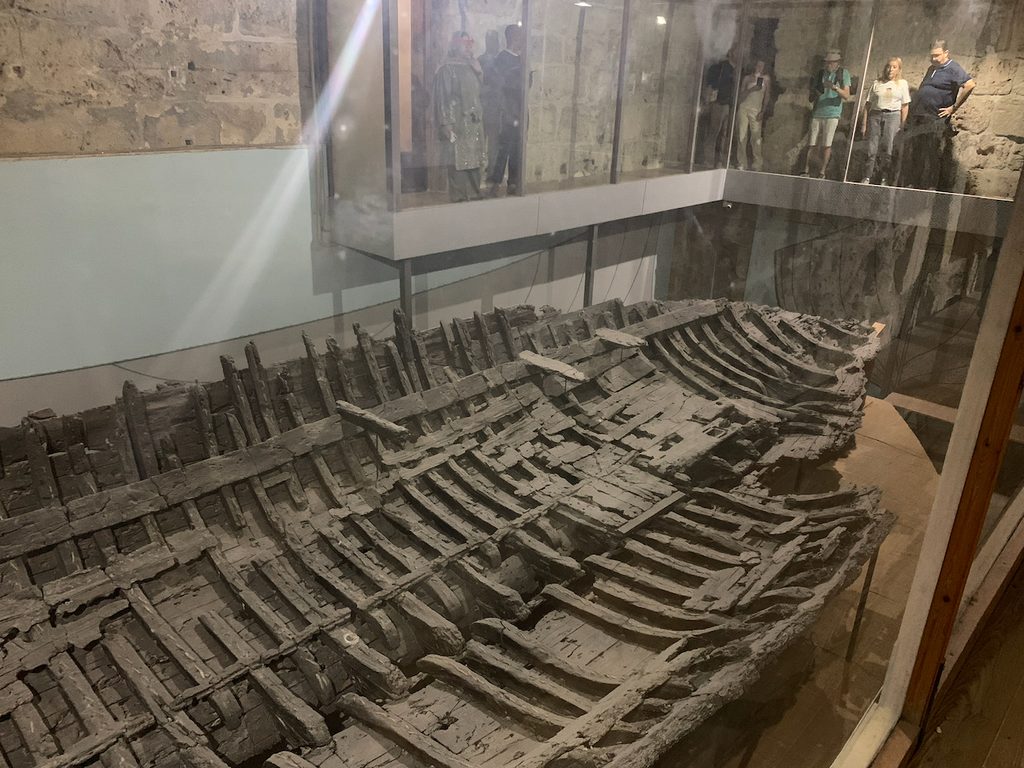
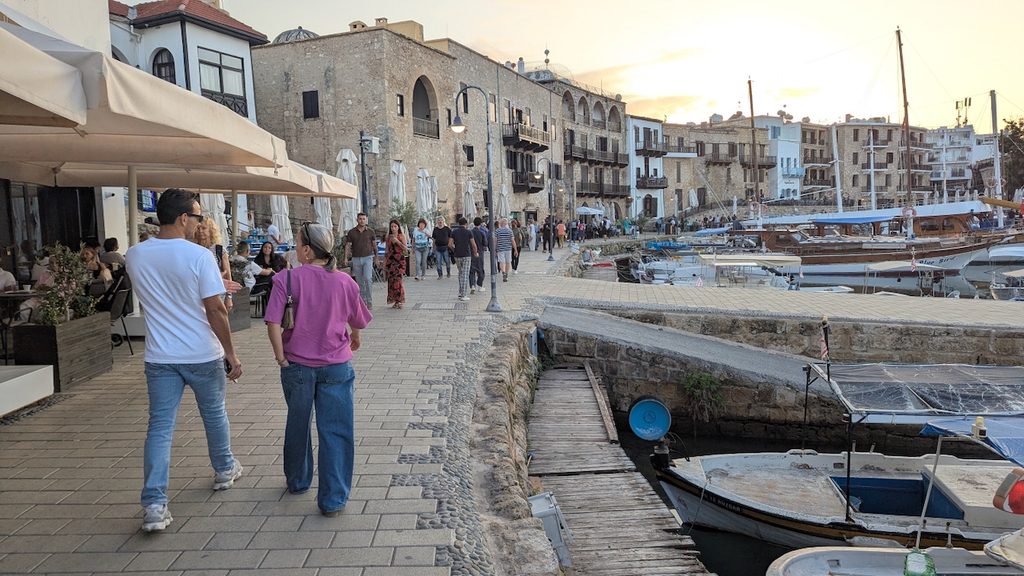
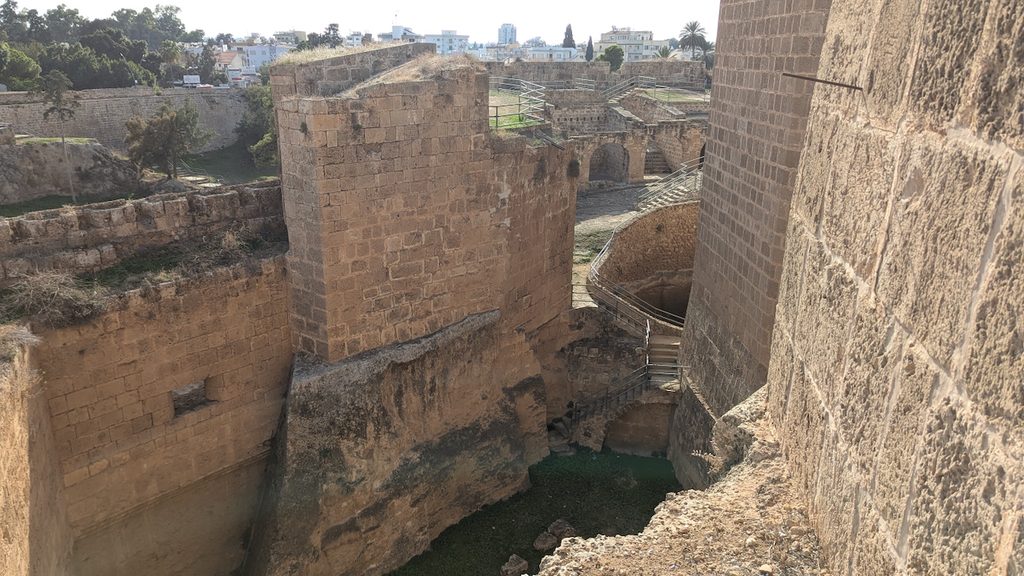
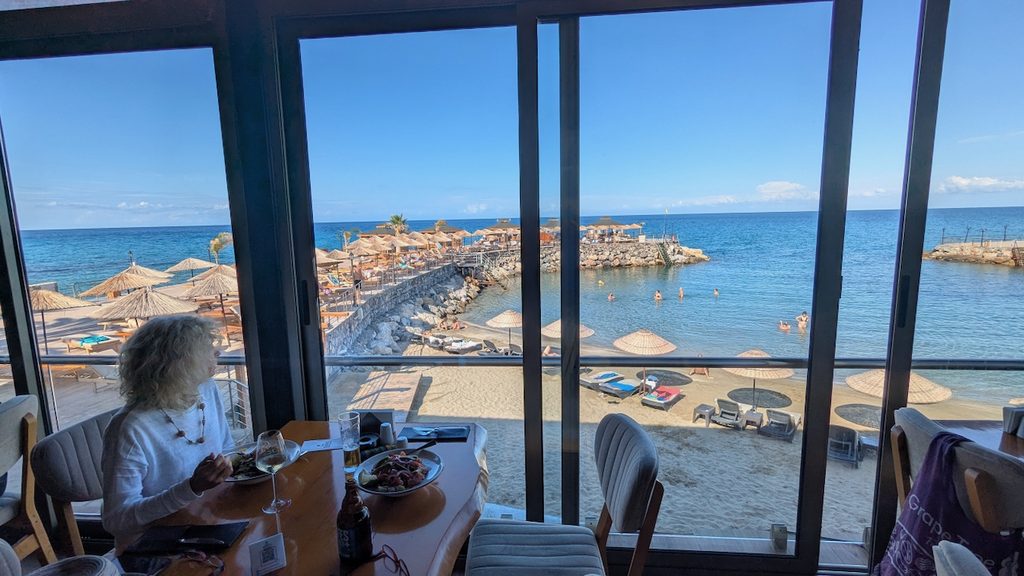
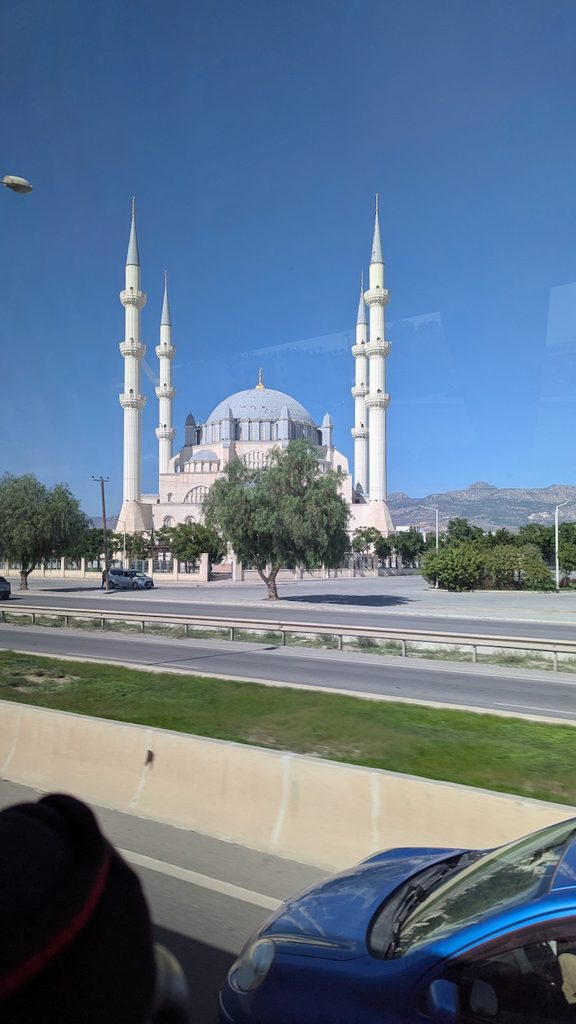
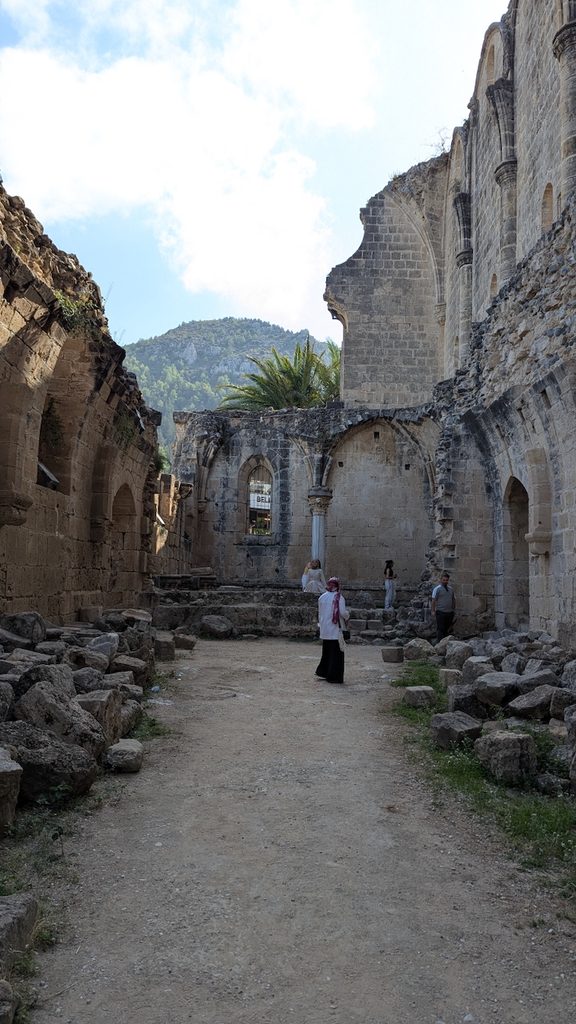
We should have known better. Well, let’s face it, we did know better. But a bargain’s a bargain, right? And when else would we get around to booking a trip to Northern Cyprus? We might have to share our trip with twenty or so other people, but so what? As soon as we board the plane, we know we’ve entered a world that grates with everything we value. We don’t like crowds, we hate being herded like sheep and we certainly object to being told what to do and when to do it. And yet here we are on a flight with 189 other people – 189! – all embarking on the same ‘eight day cultural tour’ and all being ordered around with the same level of contempt. Groan.
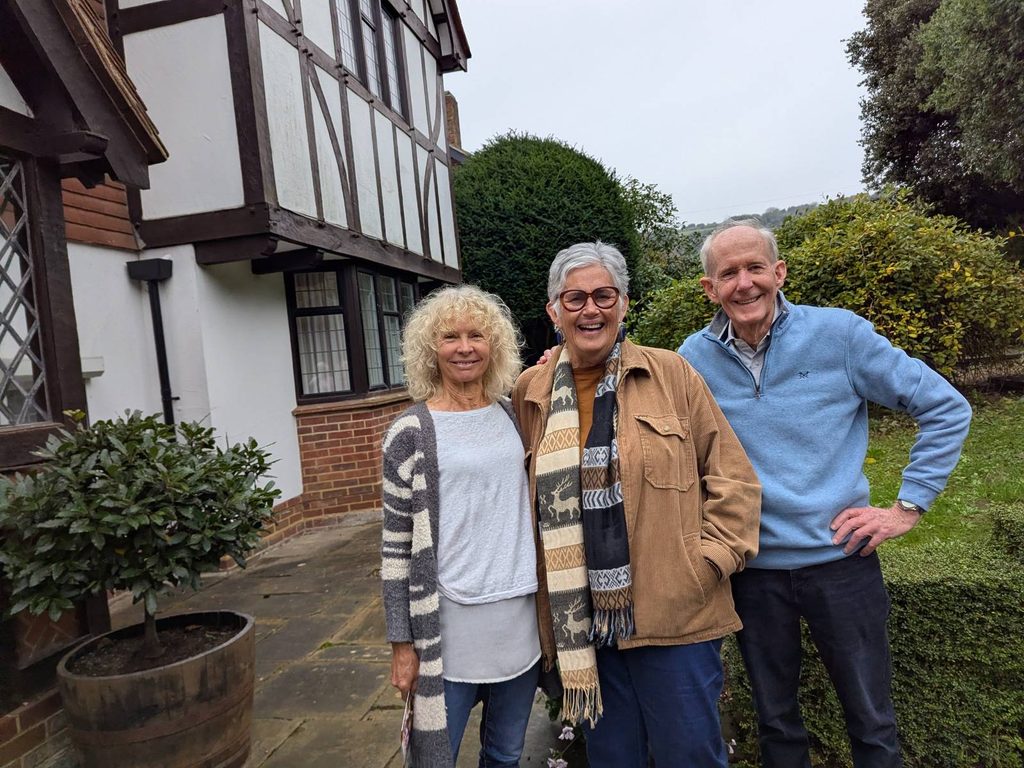
Before we leave, we have a surprise visit from a New Zealand friend. Adrian first met Wendy in Bougainville and she and her husband, Mark, kindly loaned us their holiday house in Raglan when we were touring NZ in 2022. see https://joannaharperwrites.com/kites-and-atomic-coffee/
Wendy travels the world, advising on and supporting women’s rights. She’s also an energetic campaigner for the NZ Labour Party. An election is imminent and, like so many this year, we’ll be looking to this one for signs that national populations are rebelling against the far right and looking for a kinder, more progressive form of government. It’s happened in several countries and we’re longing for this to continue.
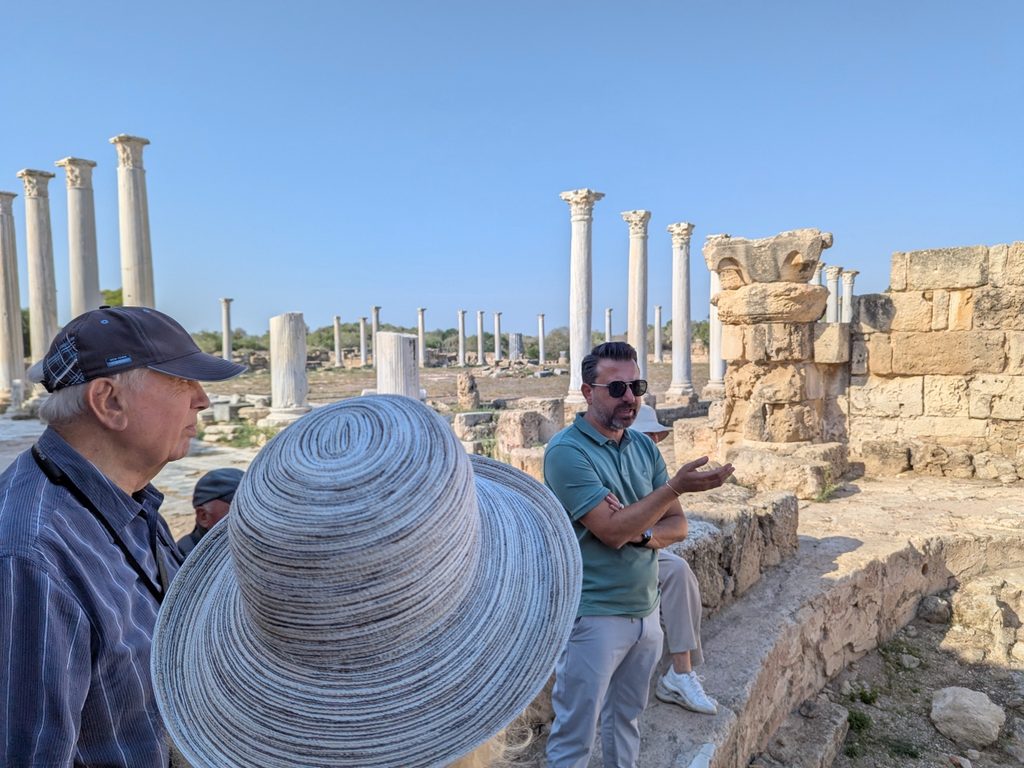
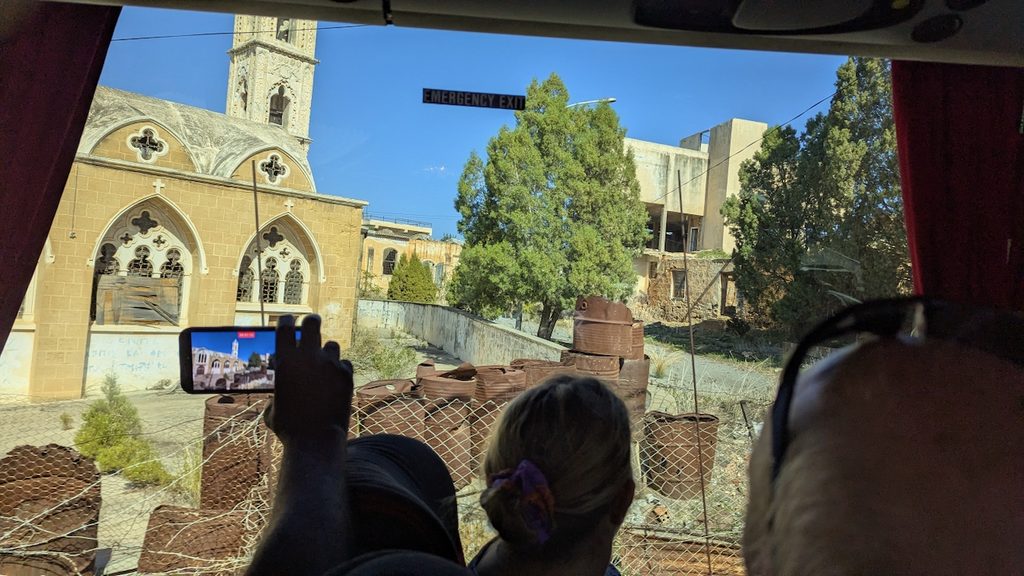
In Northern Cyprus, I thoroughly enjoy the history, the ancient Roman site of Salamis, the story of St Barnabas, allegedly buried somewhere in the island if only they could find the body; the tale of his dispute with St Paul. And, although I’ve read about the civil war, it’s shocking to witness first hand the no-mans land that is the Green Line between the north and south; to look at the miles of empty crumbling buildings that have remained unchanged and uncared for since 1974; to see the border check point that keeps the Turkish Cypriots confined to the north.
But what I don’t appreciate, is the daily abuse from our tour guide, who seems to suggest that the suffering of his family – they lived in the south but were forced to relocate to the north – is all our fault. Not only that but he tells us in no uncertain terms that it’s our duty to spend money as reparation. Large sums of money. After a token spot of ‘culture’ we’re driven to various emporiums selling carpets, leather coats and jewellery and shut into rooms where the selling sharks circle us sniffing for hints of weakness.
After the first experience, I take careful note of the way we’re herded into the building, through corridors and multiple rooms, so that I can escape as soon as the demonstrations of how these goods are made is over. Listening to our guide, anyone would think there were rows of peasant women sitting at looms, working their fingers to the bone to make handmade rugs purely for our benefit. In fact, Pasha Carpets is a Turkish import-export business, taking advantage of the free zone of the Farmagusta docks. Likewise the jewellery business. The tour guides, of course, get commission from sales, so become angry if we don’t buy.
A much more pleasant surprise of the trip, is the people we meet. At a beach in the far north of the island, where we are grudgingly given half an hour to swim, we bond with the only other people in the water: two women from London with fascinating lives and loads of character. One used to produce current affairs programmes and numerous documentaries around the world; the other was married to two different well known MPs and paints portraits. Neither of them let age (one is 91) or our tour guide interfere with what they want to do, frequently provoking barely disguised reprimands. “Our guide hates us,” declares the 91 year old smiling happily.
We meet a retired army officer who served in Cyprus in the 80s, an Afro-Caribbean family with whom we exchange jokes about some of the outrageous statements of our guide. There’s the Shri-Lankan women who works in oncology and urges me to ‘have it all out’ now that I don’t need ‘it’ any more – “It will only cause you trouble’. And then there’s the Hungarian woman we find ourselves having lunch with. She has limited English, and her husband has advanced dementia which leaves him half way through a sentence staring into space looking for the rest of it.
We spend the final two days avoiding tours, totally jaded by our guide’s constant haranguing. Don’t get me wrong. I’m very sympathetic to the plight of the Turkish Cypriots who find themselves on the wrong side of the border, outcasts in the world, recognised by no-one but Turkey itself. They can neither travel across the Green Line to the south nor go anywhere in the world without lengthy and costly applications for visas. They can no longer export the goods that once made Cyprus wealthy; their ability to earn is limited, and young students have no future unless they leave. The history of this island has landed them here through no fault of their own.
But I object strongly to being lectured to as if I’m ignorant of the politics and the unfairness, to being treated as if I’m a ‘type’. And especially to being bullied. After a tedious transit through Turkey, we finally board our flight to London and my spirits lift. I’ve never before been glad to end a holiday, but for this one, I’m prepared to make an exception.
“Will you do another one of these trips?” asks the woman jammed next to me in the plane.
I resist the urge to ask her if she’s mad.