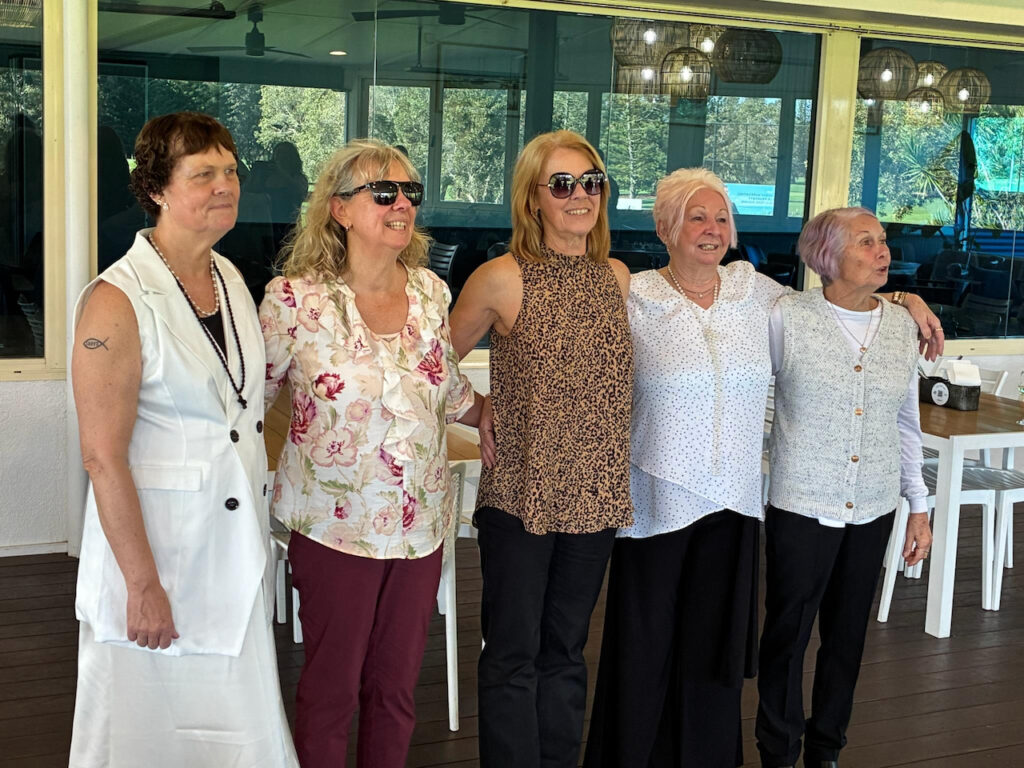
It’s 3am and Venice is quiet and cool. I stumble out of bed, pull a t-shirt over my head and grab for my macbook. Propped against pillows, I search for the link, my eyes squinting and unfocussed despite thick lensed glasses. I’m not a morning person, never have been, and three o’clock is just about as morning as you can get. Beside me, Adrian offers help – ‘Do you want me to get my laptop?’ – while I click and open up the live-streaming page of the Riverview Funeral Home. ‘S’OK,’ I manage to mutter, but it isn’t. It’s two minutes to eleven in Australia, but nothing is happening on my screen. Did I miscalculate the time difference?
‘No, I double-checked,’ says Adrian. Of course he did. He’s an arch double-checker, never quite trusting his more haphazard wife. So why am I still staring at an empty page? My heart races, my brain is a fog. And then, suddenly, we’re in and I watch the unreal, slightly gut-wrenching spectacle of my sisters, one by one, filing into the chapel for my mother’s memorial service. They’re smiling, chatting, laughing, enjoying the rare and novel experience of actually being in the same place at the same time. The service is about to begin and I’m not there.

I tell people about the conscious decision I made last October to visit my mother while she still knew who I was, while she was still on her feet, while we could still do things together. Pointless to wait until she’s dead or dying, I said, but still, the temptation to book a flight and join my sisters has been great. In the end the choice isn’t mine. I simply can’t afford the consequences of Trump’s stupid bombing of Iran.
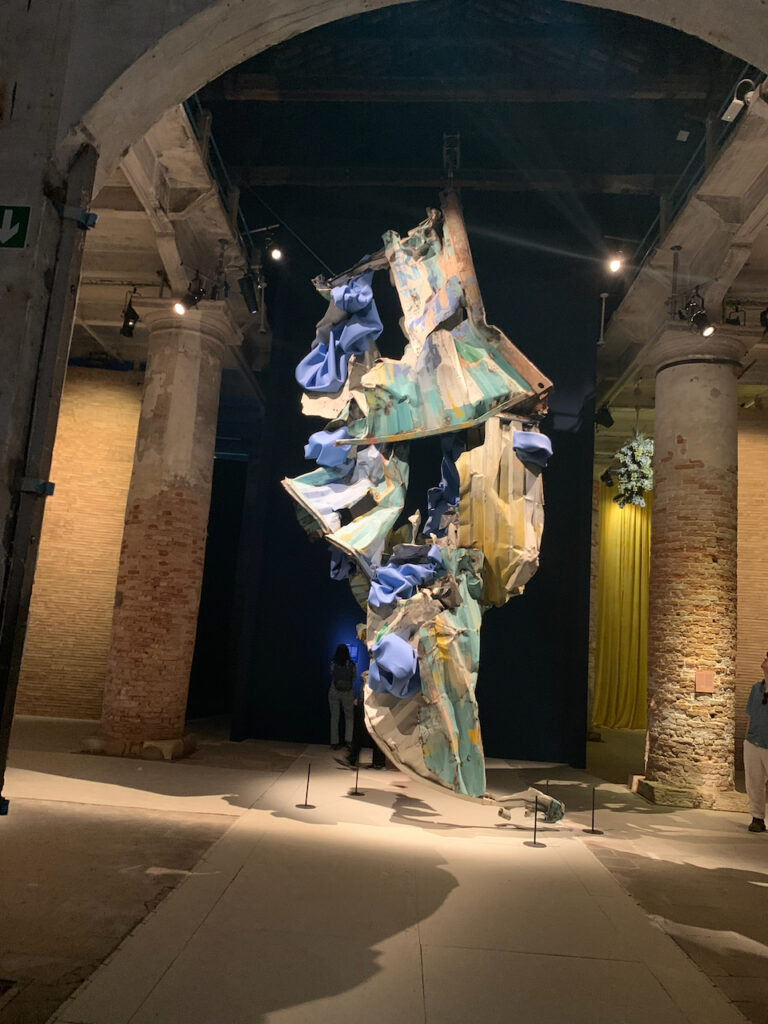
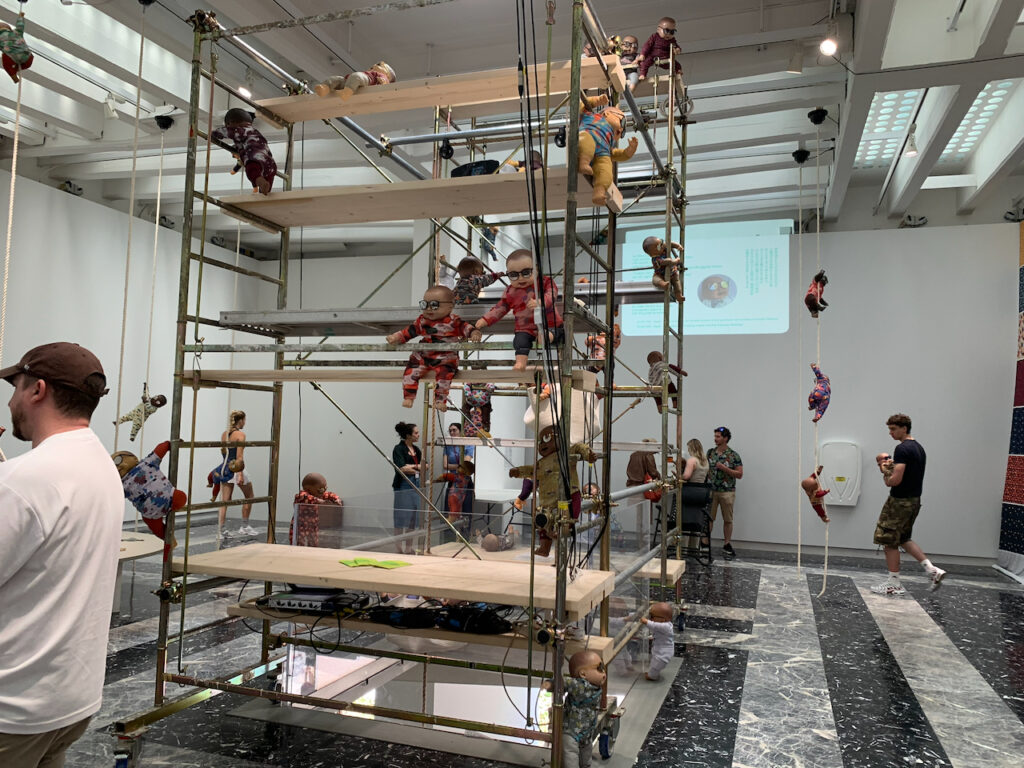
Our trip to Venice has been booked since autumn last year, so we go ahead. We’re there for the Biennale Art Festival, the one that the critics love to hate. We spend three days taking it in. It’s vast, covering most of Venice and the two main sites of the Giardini and the Arsenale are packed with innovative, immersive installations that sometimes grab hold of the senses and mess with them. Around a hundred countries take part and, as modern artists typically like to challenge or subvert aspects of their own cultures, these exhibitions give a unique insight into national stereotypes and norms as viewed from the inside. Some of the art is simply beautiful, clever or shocking and easy to grasp. The wow factor is high. Other exhibits are just baffling, or so bizarre I find myself laughing at the absurdity. But it’s never boring, always surprising. What else can keep you entertained for six hours at a stretch?
And Venice is such a gorgeous city to be in. Our second floor flat is in a relatively quiet area between the Giardini and Arsenale vaporetto stops, overlooking the spot where the Grand Canal becomes a lagoon. I say ‘relatively quiet’ because there’s a woman with a foghorn voice living somewhere behind us and she seems to come to life around midnight. We know some other people from Eastbourne, also there for the Biennale, and we meet for dinner on Friday night to exchange views and stories.


‘Sorry to intrude,’ says a woman at the next table, ‘but have you seen the Austrian exhibition?’ It’s the one everyone is talking about: the one with the naked woman upside down inside a bell and another swimming in urine. Our friends shrug. What can you say? It’s closed when we visit, ‘due to illness’ and we’re not surprised. The bell woman causes herself physical pain whenever she does the donging and goodness knows what lurks in the urine. I’m relieved. But we’re sorry to miss the Netherlands Pavilion. Only a few people are allowed in at a time and the queue is endless. ‘We’ll come back,’ we say. But when we do, it too is closed.

On our way from Venice to Verona, we stop off in Padua to take in the Scrovegni Chapel covered floor to ceiling in Giotto paintings. These, so the historians say, mark the beginning of European realism in art or, rather, a rediscovery of the realism of the classical era. Interestingly, Giotto’s everyday scenes of Mary and Joseph’s life seem real enough and quite genuine, whereas the religious scenes e.g. Jesus ascending into heaven, look forced and false.
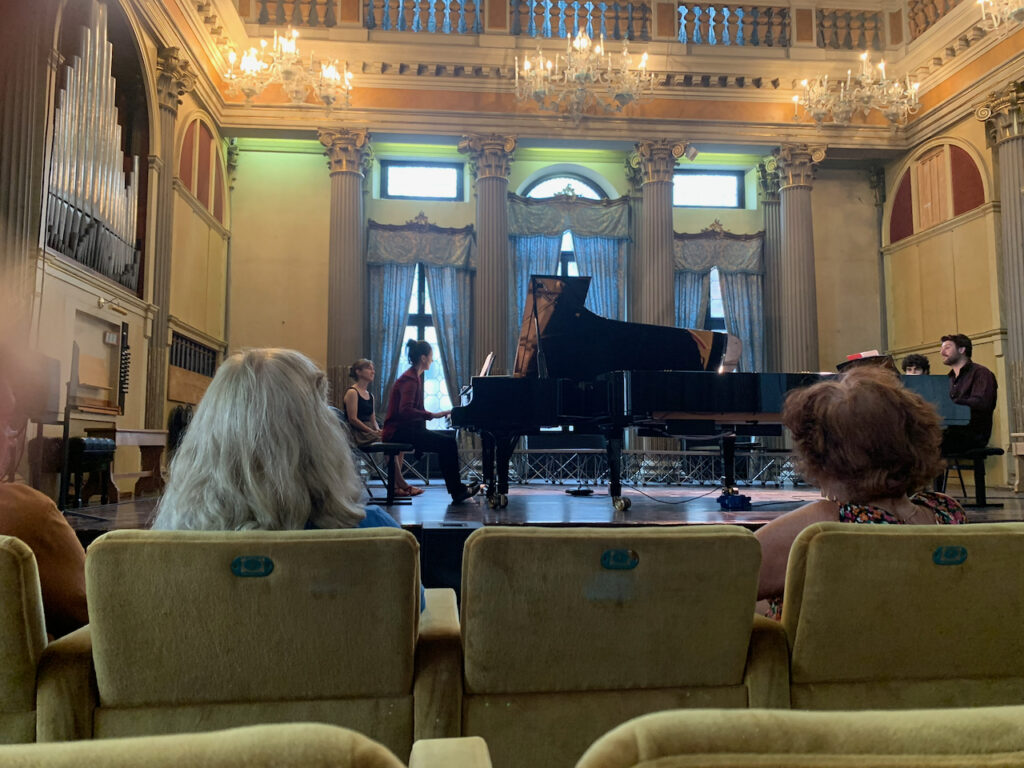
Verona captures our hearts and senses immediately with its architecture ranging across two thousand years. We walk and walk, climb steps and towers, visit the art collection in the Castelvecchio, eat in charming restaurants and listen to opera in a palace. Our accommodation is pokey and hosted by a large young man who doesn’t much like getting up to deliver breakfast, but it’s very central and we spend little time there.
For my birthday, Adrian intended surprising me with a Rossini opera in Pesaro (R’s birthplace) but there isn’t one to be had until later in the month. So, instead, we come home to Sussex and see the perfect Rossini opera at Glyndebourne – the laugh-out-loud-funny Il Turco – on the one dry day of the week. Sometimes, things just fall into place.


And now we have a eucalyptus tree in our garden waiting to fall into place for my mother. Alex and Kate will join us at the weekend and in the ground it will go. I couldn’t sleep after the live streaming of her memorial service. It was just too weird watching my family watching me in a video recording of my eulogy, hearing their own reflections on the woman we all feel so differently about, wondering about the conversations that took place afterwards in the mild winter of Yamba while I lay in bed in Venice’s summer. It was days before I could stop the live stream in my head.
But, somehow, having the tree in our garden, knowing it will soon be planted, knowing we can mark the death of my mother in a way that’s physical and real, has brought calm. I keep thinking: ‘Mum would love this’, can’t get past the idea that she’d still want to be here. But maybe I’m wrong. Maybe, finally, after almost ninety eight years, she was too tired to keep going, worn out, happy to rest. And maybe, it’s selfish to still want her to want life. My own fear of the inevitable.