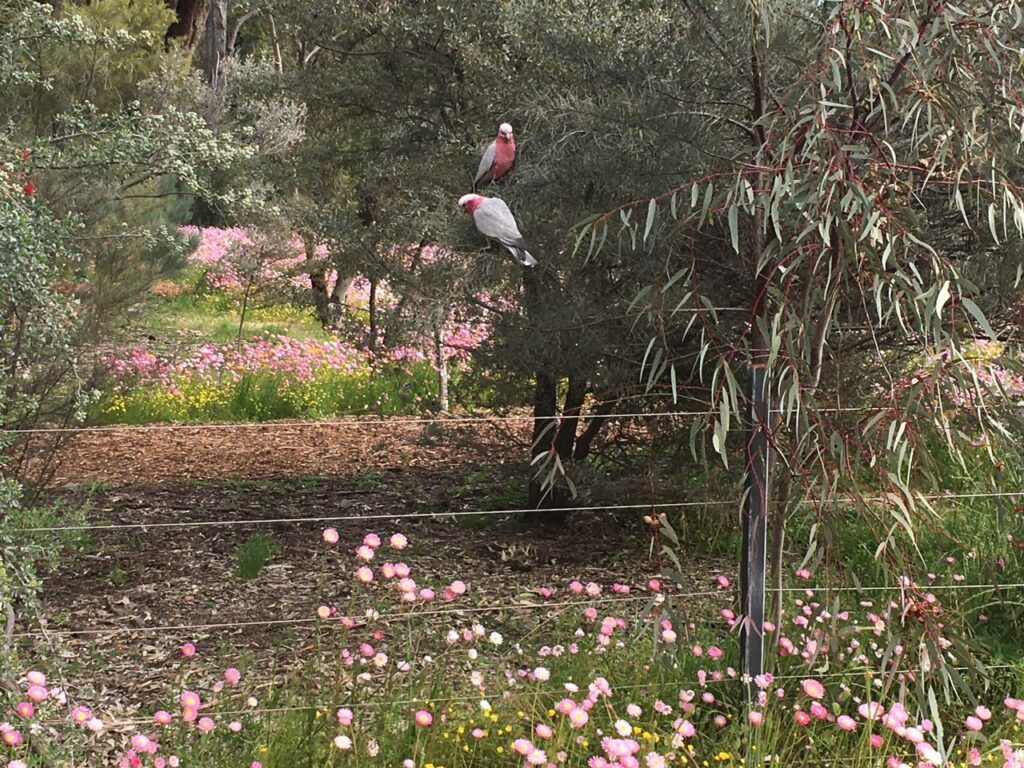
Perth is just as I imagined it and completely different. It’s a very liveable city on a human scale, with large open spaces, parks and gardens. It’s also well organised, tidy and clean. The facilities are brilliant. All that comes as no surprise. This is, after all, the capital city of a wealthy, well-run state. But what I didn’t expect was the beauty of it; the river, so broad that it could be a harbour; dotted with marinas and lined with grassy paths, clubs and cafes; the park sitting high on its western side covering four hundred hectares, most of it native Australian bush. At this time of year, it’s bursting with wild flowers, some of which we’ve never seen before. Then there’s the quiet, leafy streets of traditional houses with their wrap-around verandahs, and lemons and mulberries growing in the gardens. All this within striking distance of the CBD.
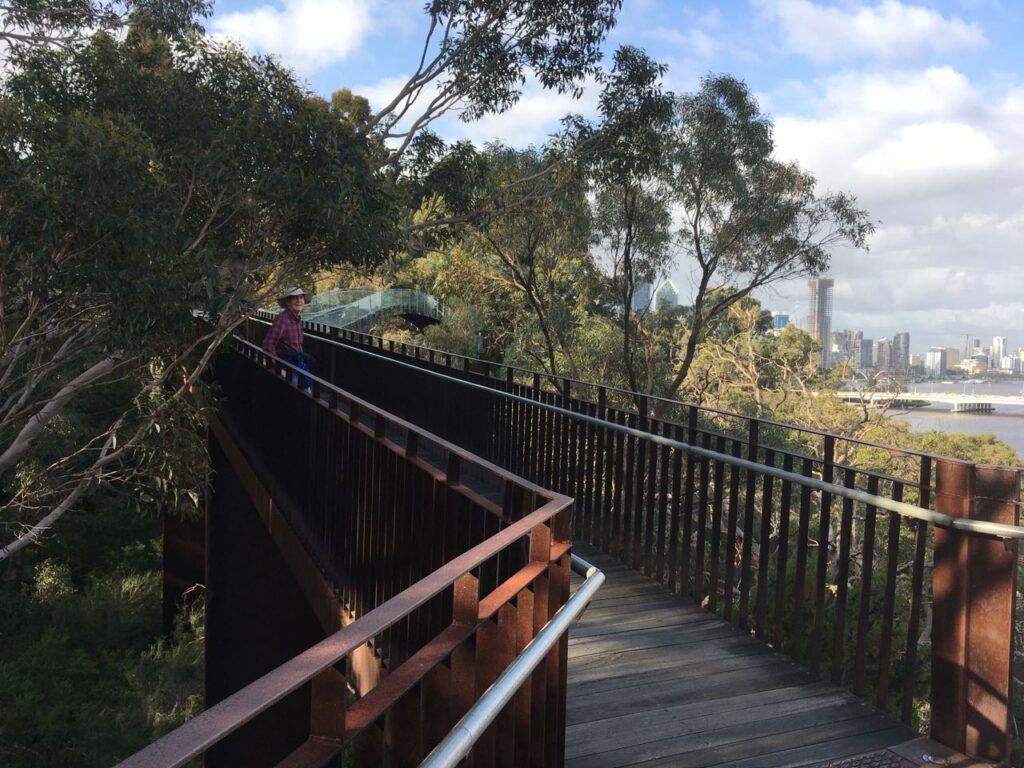
Kings Park (named for George VII) was established by WA’s first Premier, at the end of the 19th century to ensure that the growing city would always have this natural space for its inhabitants to enjoy. That’s forward planning, long-termism on a scale that’s anathema to our current politicians. The park’s just a couple of blocks away from where we’re staying, filling the space between Subiaco and the city centre. We follow one of the numerous pathways, pass occasional cyclists and runners and emerge into the Botanic Gardens which are laid out in sections: flora from various regions of Western Australia, a water garden devoted to pioneering women and a wonderfully evocative commemoration of the ANZACS who fought, and mostly died, in two world wars.
We take the steep climb down to the river on which at intervals is set out the story of the infamous Kokoda Trail in Papua New Guinea, where a Battalion of 1100 was reduced to 49, defending Port Moresby against the Japanese invasion. As we descend the steps and climb back up again, we pass men and women, some not at all young, taking them at a run over and over again. It’s a gruelling form of exercise, fitting, I suppose, in a place that depicts a gruelling wartime campaign. We follow the tree top walk and climb the DNA tower all of which gives us extensive views of the city spreading out either side of the Swan River.
We’re beginning to know this place. Greg’s and Gilly’s brother-in-law, David, has kindly given us a tour of the city, driven us along the length of the river to where it meets the coast. And there’s another surprise. The beaches are no more than ten minutes away. And there are no traffic jams. After Malaysia, this free flow of cars seems incredible. In the evening, David and his partner, Ginny, join us for a drink and we quiz them further about the city. Both British, they’ve lived in Perth for around forty years. Apparently, Perth has the largest British population of any Australian city. Historically, immigrants disembarked in Fremantle and, passages to other Australian capitals being difficult, they stayed. But more recently, Brits move here simply because it’s a great place to live.
And there’s another lovely surprise. We take the short train journey to Fremantle, using the Oyster cards loaned to us by David. The contrast to Perth couldn’t be greater. Its old streets and old buildings have been preserved but not quite restored.

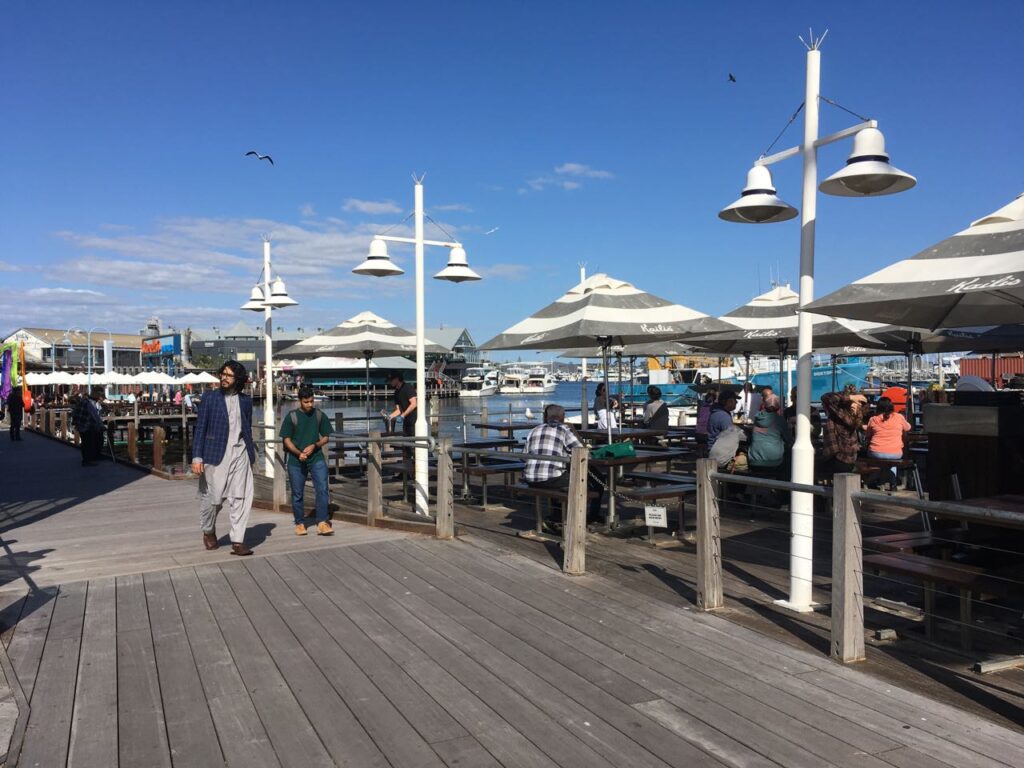

They’re a bit flaky, a bit care worn, lived in, real. The place has an arty, bohemian feel. Everywhere, there’s wonderful street art, some of it covering entire buildings and the Cappuccino Strip is bursting with outdoor cafes and people seemingly on an endless holiday.
The harbour front has undergone renovation, with wharfs and warehouses now home to more cafes, more restaurants, more people with the leisure to enjoy them. As we walk by the long dockside sheds, full of chat and laughter, toward the Maritime Museum, we have to remind ourselves that it’s 3pm on a week day.
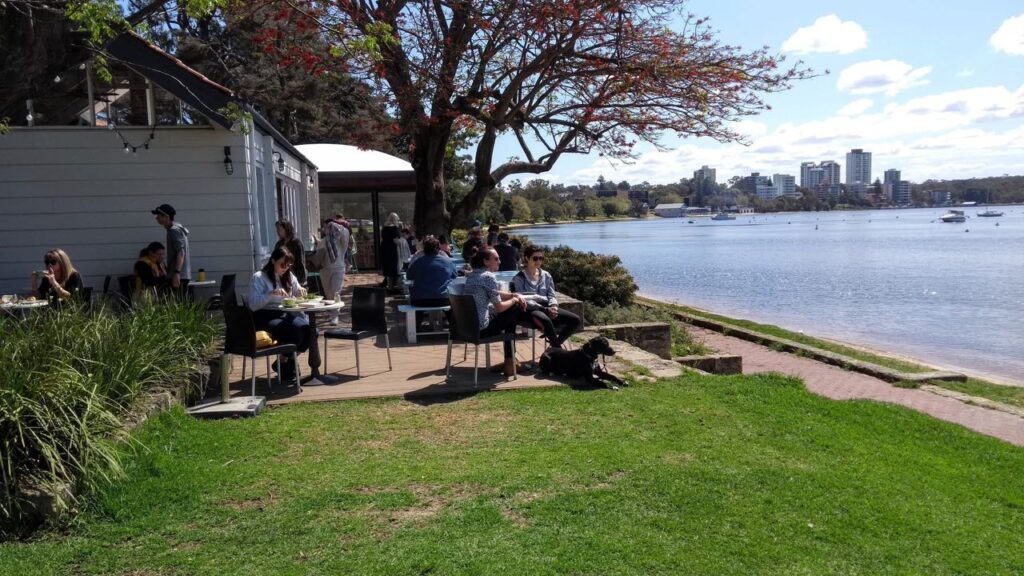
The following morning, we’re sitting in bed, with our tea, in Gilly’s and Greg’s imaginative architect designed house, looking out onto the garden through floor to ceiling windows. The garden’s full of trees, shrubs and birds, totally quiet, private, and we marvel at the knowledge that we could easily walk out of the front gate, through the Kings Park and into the city centre. We’re that close. Later we visit the university of WA, walk through the leafy grounds and then along the river to the Bayside Kitchen in Matilda Bay for coffee. Sitting outside in the sunshine, while sailing boats bob on their moorings, children play on the water’s edge and across the river in the distance, the skyscrapers mark the city, we check in with each other. Yes, we agree, we could live here.

