We return to Bundeena and I’m instantly at home. The bay, the beaches, the pull of the sea off Jibbon beach, the bush walks and the flat sandstone ledges high above the wild ocean: it’s all so familiar. We arrive at our Airbnb accommodation hosted by the son of the man who owned this property when we visited ten years ago with my mother. The view is uninterrupted and the wide bay stretches before us reaching out to sea between Jibbon Point and the blunt nose prow of the Kurnell peninsular.
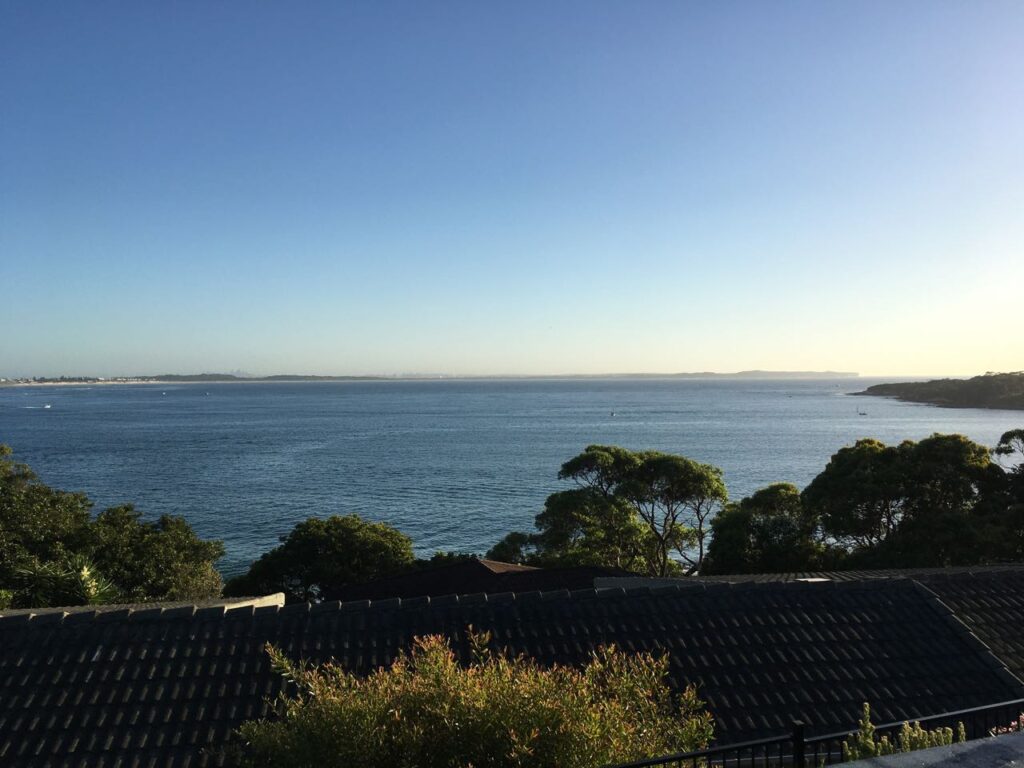
On our first morning, a hot sunny day, it’s alive with motor boats, sailing yachts, jet skis, canoes. We walk down to Jibbon beach for a pre-breakfast swim and already the beach is busy with families setting up gazebos and picnic tables. In the afternoon, the sailing races start and it’s only in the early evening that the beach begins to empty. By Monday morning, we’ll have it more or less to ourselves but at the weekend, everyone wants a bit of this gloriously unique place.
We visit two very different houses for sale, neither of which is suitable, but the housing stock in this square kilometre is so limited that we wonder if the tiny cottage with an estuary view might possibly be made into something we could live in. I’ve told our friend, Eleanor, where we are and she meets us at the Maianbar cafe for coffee, cake and a catch up. She’s just been accepted into the Australian Dragon Boat team and we’re pleased for her that all the hard work of training means she’ll now be competing in Thailand in August. We talk easily and non-stop for more than an hour and then walk back to Bundeena together.

Everywhere we go, people stop and chat. On our way to the beach for yet another swim, an elderly German woman tells us gleefully of a shortcut. ‘I see you take the long way!’ she exclaims laughing, ‘no need!’ and points across what we assumed was the neighbours’ garden. ‘My doctor says “no swimming”, she adds as she hobbles along with her stick. ‘He operated on my leg, darling, and he thinks I’ll fall on the sand. Huh!’ She laughs again and limps towards the water.
As we walk back for lunch, we meet a woman with her grandson happily pushing a large Tonka truck along the path. ‘One person’s junk is another person’s treasure,’ she remarks, smiling, then explains that it’s Council Clean up weekend and anyone can help themselves to the toys, furniture, sports equipment and other items that householders discard onto the verges.
In the afternoon we see a large plastic climbing frame strapped to the roof of a car and are offered a cycling machine that looks brand new. The piles of equipment in front of some houses suggest that their entire contents have been emptied onto the street. But by Tuesday, it will all have been removed. Recycling is important here and many gardens display the state election poster for the young Green Party candidate.
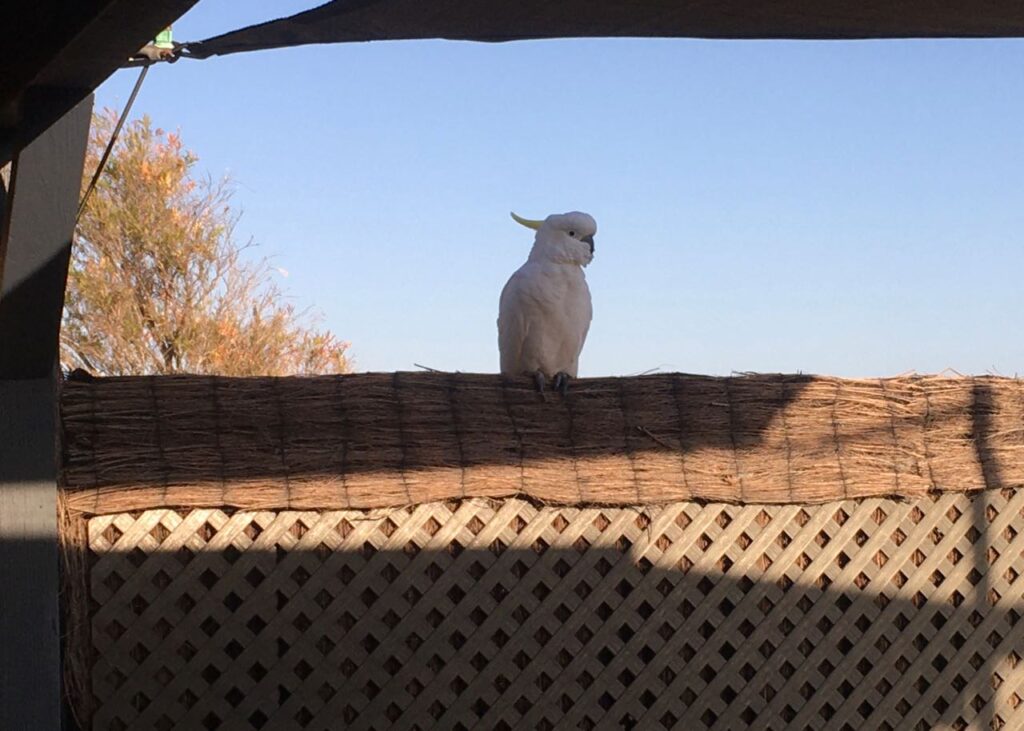
We take a walk around the rocky coastline to the large flat area called the Balconies and pause every so often to take in the vast empty ocean stretching towards a few ships on the horizon. As the path heads into the bush, we hear the call of the whip bird, who teases with a long drawn out note before finishing with that startling whip. We see a rare black cockatoo, a vulnerable native species, shyer and quieter than its raucous white cousins.
Then back at our beach house, we watch tiny black swallows swooping across the sky while the multicoloured Rosellas screech through the air above them. They’re both indigenous but seem to hail from different worlds. As in New Zealand, a number of European birds have been introduced here, but the Australian bush doesn’t suit them and they tend to stay in the towns. So, with the exception of the occasional sparrow, the natives still rule the sky above Bundeena.