We head north from Napier via Gisborne and Tauranga, only to hear en route that a cyclone is heading towards us and the north tip of the island – our destination – will be hit worse than anywhere else. The harbour bridge in Auckland, which we’ll need to cross, has an amber weather warning attached to it. In Tauranga, with the wind picking up, we screech on the brakes and have a rethink.
There are several accommodation bookings to undo. And quickly. The first host we contact isn’t happy. Last minute cancellations usually entail a complete loss of fee and the exceptional circumstances we sight are, initially, just as lost on her. It isn’t until the next morning when we’ve resigned ourselves to braving the weather and carrying on, that she contacts us to say she’s worried about us traveling in the storm – it’s literally hit her overnight – and has cancelled our booking with a total refund. This is good news. But, of course, we now have no more than an hour to find an alternative place to stay. And this is the busiest holiday weekend of the New Zealand calendar.
But to back track slightly. Our stay in Gisborne is very pleasant and we learn that this is the location of the first meeting between Maori and Pakeha (Europeans). In 1769, Cook’s ship, crew and scientific party put in at Turanganui-a-Kiwa Bay with the aim of replenishing their food and water supplies. The meeting, which begins well with the Maori traditional greeting, the ‘Hongi’, ends in disaster with several Maori shot dead and no provisions for Cook’s ship. The British name the place Poverty Bay.
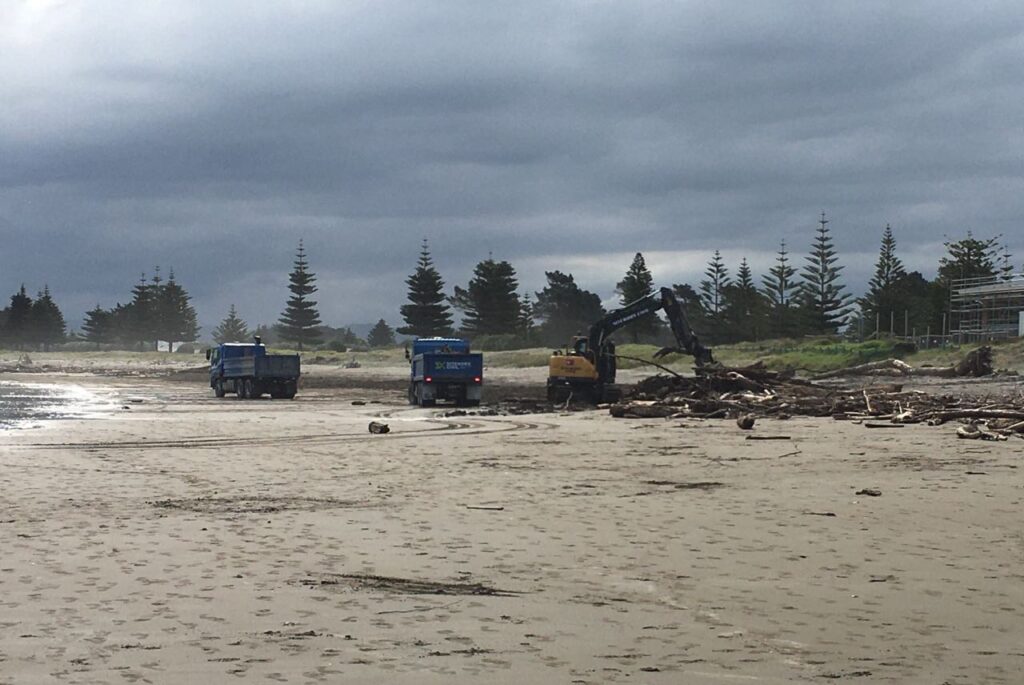
In due course, with the British purchasing land and settling here, the township grows up around the river port, and farming and forestry industries. Today, the vast road trains roar in and out of the docks every minute of the day bringing their loads of sawn tree trunks for shipping. Just under 3 million tonnes of timber leaves the port every year. On our visit, we notice piles of forest debris banked up in the river and the main beach is covered in logs, tree roots and even sawn planks. As we walk along the seafront, we see trucks and heavy moving equipment laboriously clearing the wreckage from the sand.
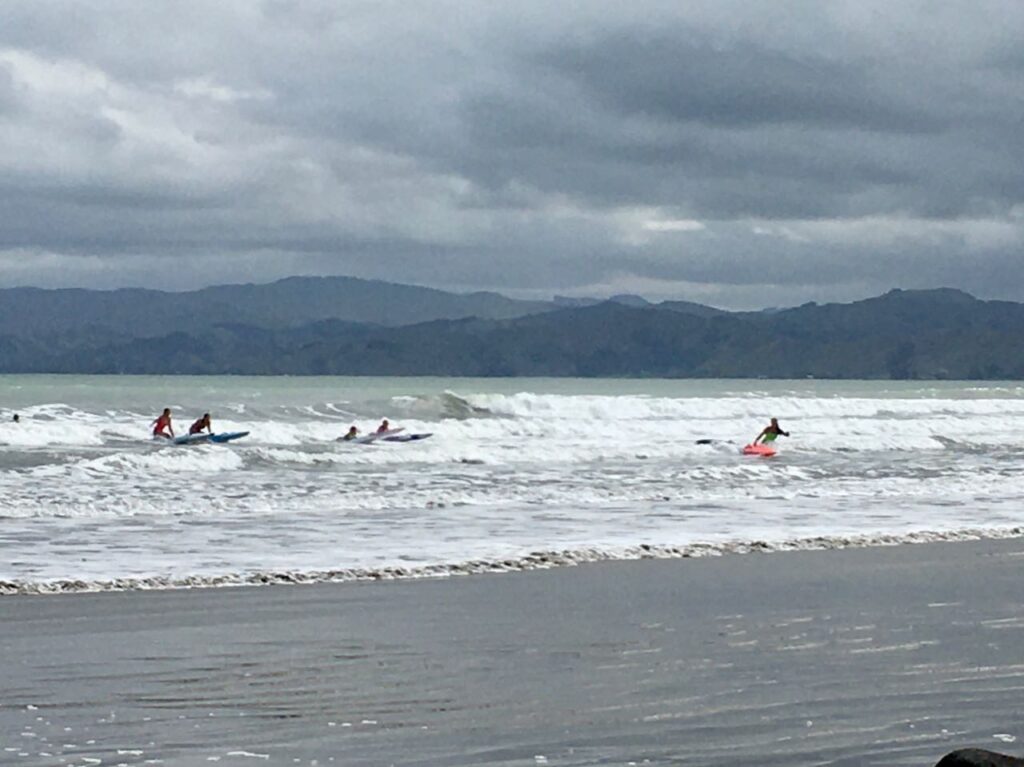
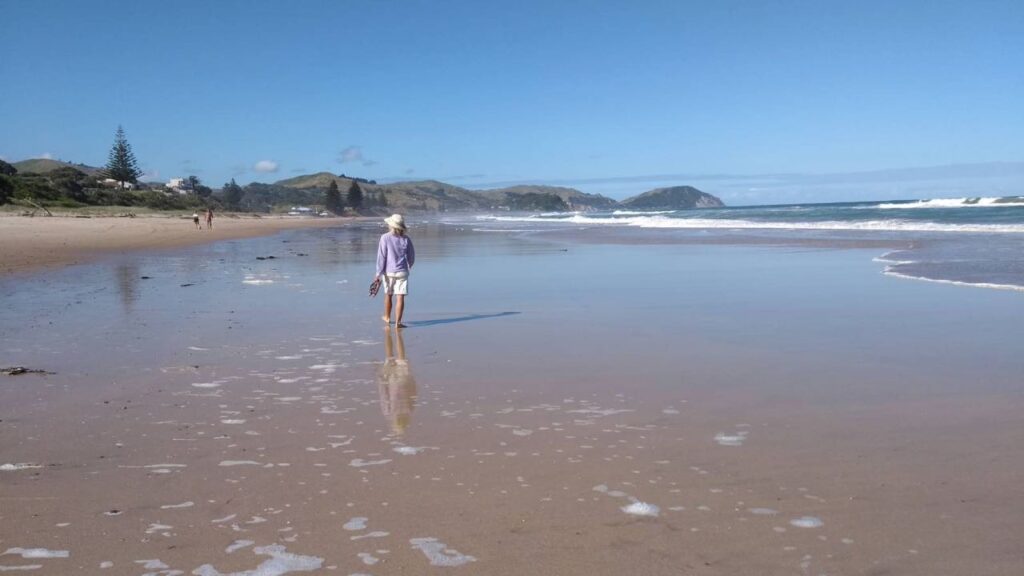
But Gisborne is also a holiday destination and the beaches north of the town are known for their surf and their wild sweep along the Pacific Ocean. The wind is chilly but the sea is warm and we remove our sandals and paddle along the shore.
In Tauranga with the wind and rain increasing and our northerly accommodation cancelled, we find a farm stay on Airbnb which is free for the next two nights. It’s a little inland from Whakatane in the Bay of Plenty so will hopefully be sheltered. Then on Sunday, we’ll head to Ohope Beach for a week before taking up our final house-sitting job. With a bit of luck the worst of the weather will be north of us . . .
Meanwhile, in the world of politics, Jacinda Ardern has resigned as Prime Minister while still a popular and successful leader. I think this must be unprecedented. Certainly in the UK, leaders are generally dragged kicking and screaming from Number 10, even when their own party has withdrawn support. In less than a week, Chris Hipkins, the Education Secretary, has taken Ardern’s place. It’s all very smooth and very civilized, achieved without pointless media speculation or insulting headlines.
Nor does this unassuming Prime Minister throw herself an expensive farewell party. Instead, she hands over the leadership at a ceremony held in Ratana Pa, a Maori church, and gets on with her life. At 37, she was the world’s youngest female Prime Minister and must be amongst a very few who’ve had a baby while holding office. Of course, there have been threats from conspiracists and anti-vaccers. Certainly, her Environment, Covid and Maori policies have spawned enemies. But the fact that she was able to lead from the front with kindness and sympathy, I think is as much a tribute to the bulk of New Zealanders as it is to her.