Lake Macquarie is the largest salt-water lake in the southern hemisphere. It’s also a perfect place to spend a week with my mother. She sits in the large picture windows and watches over the water where there’s always plenty of entertainment: pelicans, cormorants, ducks, plovers and boats. Sometimes there are sailing races and this sparks mum into commentary mode. Not fully understanding the process of tacking into the wind, she cries out in dismay as some of the dinghies head off in the ‘wrong’ direction.
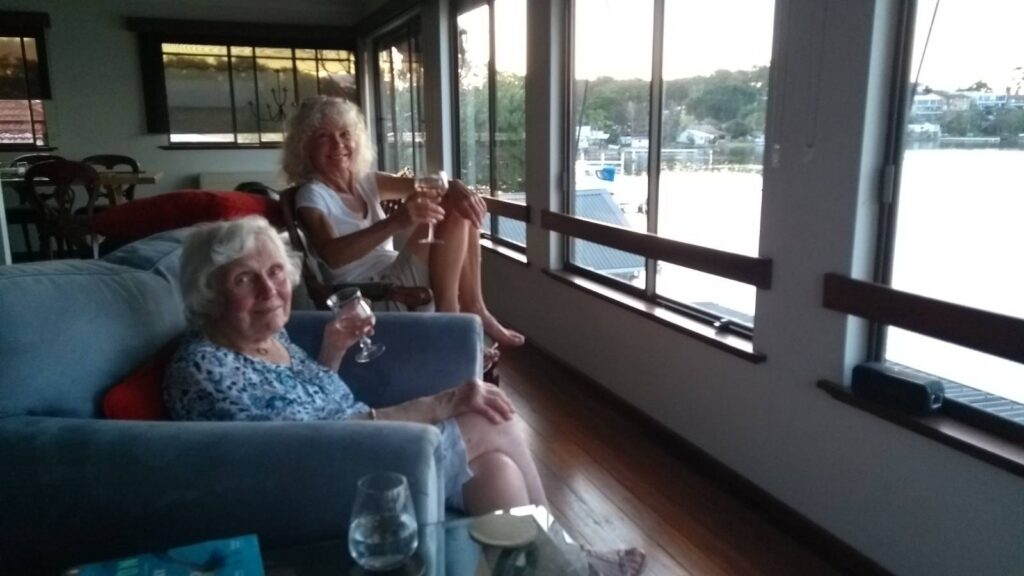
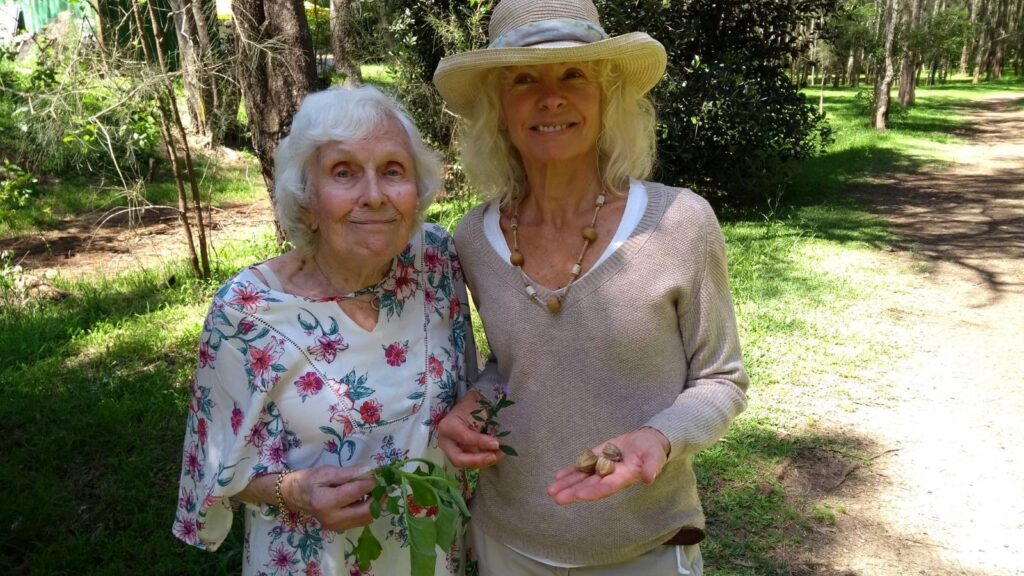
There are numerous relatively flat lakeside walks to take her on. She still loves walking in the bush and on one of these walks, we meet a specialist in ‘bush tucker’. After exchanging greetings with him, we find ourselves the recipients of not only a great deal of insider knowledge but also edible berries and fruits. We try cape gooseberries and sandpaper figs and rub the leaves of wild mint.
Suddenly, the urge to forage is irresistible and we finish our walk with handfuls of bounty. Mum picks some wild spinach and is determined to try to propagate it back at her care home. I wonder (a little sadly) how this will be possible when she has no garden of her own, but she’s a very determined woman, so she may find a way.
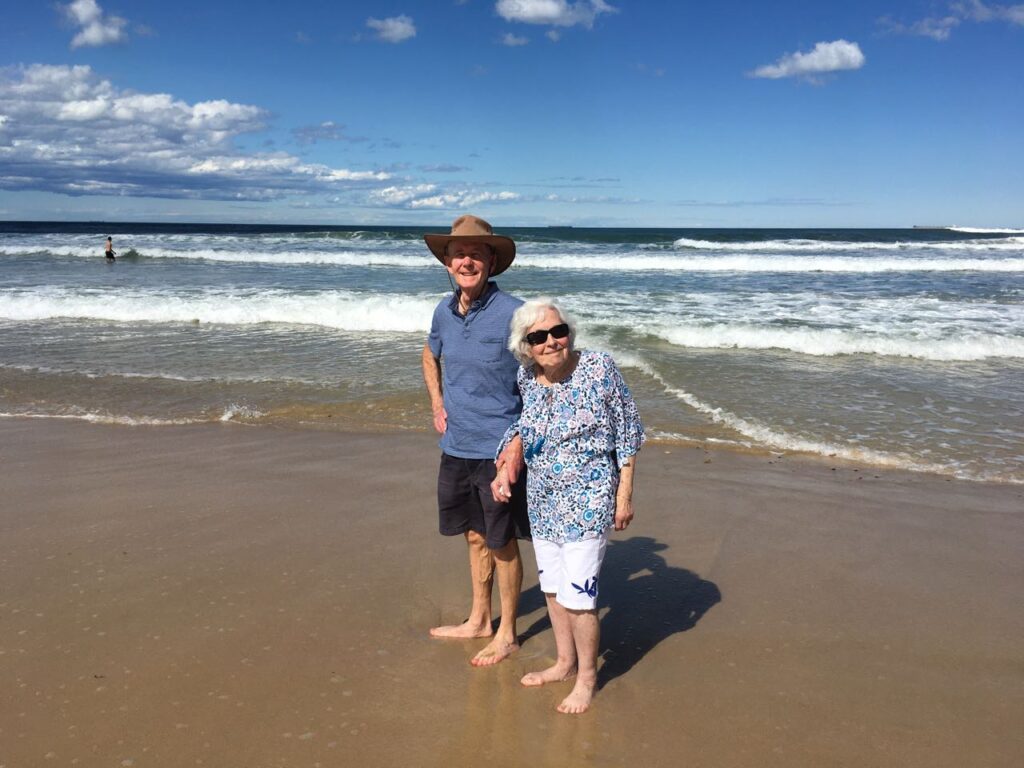
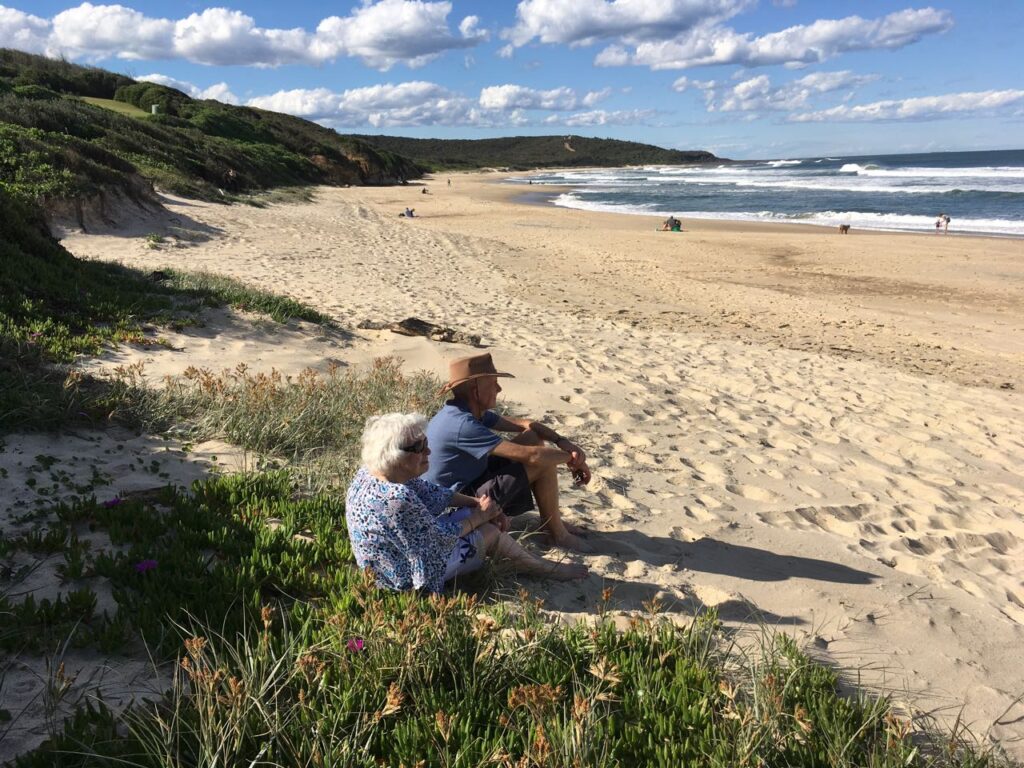
At Catherine Hill beach, mum slips off her sandals, feels the sand between her toes and throws her arms wide to the sea. ‘I’m free!’ she cries and it almost breaks my heart to know that at the end of the week I’ll be delivering her back to a place where there’s no sea, no bush, nowhere to walk in the open. The thought of this keeps me awake in the night.
My mother is still able to take care of her own needs and, indeed, makes her own food in her one small room. The food provided by the care home, she says, is barely edible and not at all healthy. Healthy eating is an intrinsic part of her life. Back when we were small, she was ahead of her time in her views on diet. My sisters and I were fed fruit, vegetables, raw oats and no refined sugar. We also had some meat, although for decades she’s been pescatarian herself. In her care home, she tries to continue this diet, but it’s a struggle and it pains her.
At ninety four, she’s now very forgetful, constantly vigilant and anxious. Her biggest fear is that she’ll morph into one of those other people, pushing walkers, pushed in wheel chairs or, worse, confined to bed. To ward off such an event, she visits the gym daily to peddle the static bike. ‘I’ve done eight Ks!’ she boasts when I phone her. But it angers her that she’s confined and I can’t blame her. She still has a great interest in novels and music and no-one with whom to share her passion for opera. My sisters and I talk over the issue, but constantly reach the same dead end which equals our-mother-in-a-care-home.
My eldest sister, Julia, is the one who lives close by and who takes her out to shop, to browse and to enjoy coffee and cake. But Julia’s patience is running short. In her anxiety about her lack of privacy, mum has taken to hiding possessions in obscure locations and then, inevitable, forgetting in which particular obscure location she’s hidden them. Not finding them and assuming they’ve been taken, she phones my sister in distress. Often. It isn’t surprising that Julia is driven to distraction and, after a year of her own terrible tragedy, she’s at the end of her tether. It’s an increasingly difficult situation which is effecting them both badly. But what to do?
After mum’s week with us in Lake Macquarie, I take her back to the place she hates to be. She does her best to put on a brave face but, after I hug her one more time and kiss her soft cheek – she has remarkably good skin – I can see the tears glistening in her eyes. Before I leave, I speak to the duty nurse about mum’s medication. She’s on a constant dose of an opioid for reasons that seem to me rather vague. Combined with other mood altering drugs, I’m sure this must be impacting her memory, increasing her forgetfulness. Surely? It isn’t rocket science.
When I voice my concerns, the nurse looks rather jaded and weary. She says she’ll ‘review’ the treatment with the staff, but I know I have no authority here. I’m the sister who lives abroad and I have no control over my mother’s life. All Adrian and I can do is give her a holiday from time to time; a brief taste of freedom. Does this make being in her care home even harder? Possibly. But she’s had such a happy week, we shared so much . . . I can’t believe it’s a bad thing.
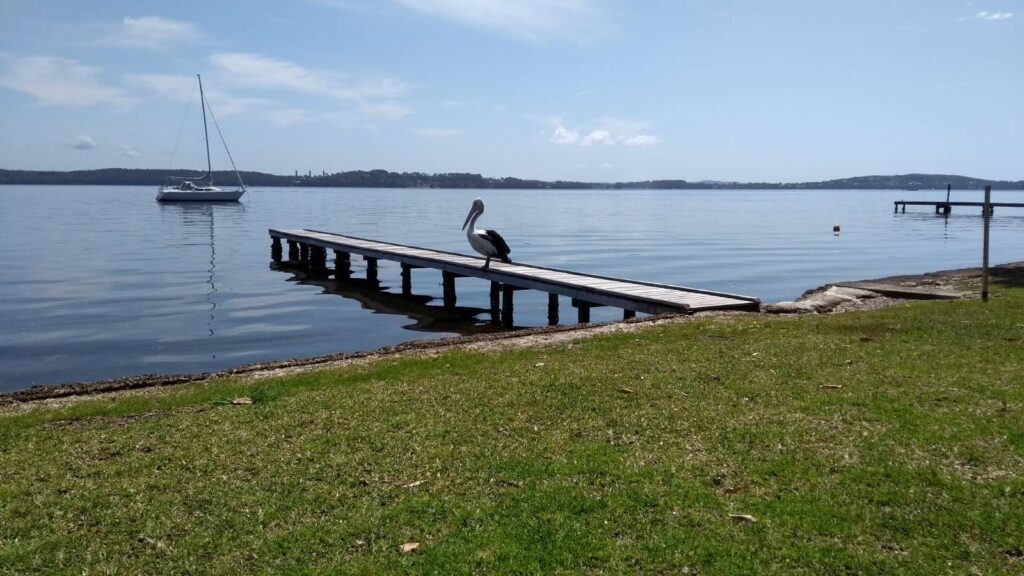
In the meantime, we stand on the seashore and let the waves surge around our legs. At the house, we watch flash mobs of Handel, Beethoven, Ravel and Verdi. We laugh at the funny bits in her novel and watch the dinghy races on the water. We talk endlessly about her past, her worries, her aspirations. And yes, she still has aspirations. I give her all my attention and the week is exhausting. We pack up the house, pick up my sister and head down to Bundeena, where my sisters and I spent much of our childhood. I’m sad that mum won’t share this experience, but Julia needs a break too.
So, so special to read about your dear mum Joanne – I so fondly remember her and her health food ways, which gelled very well with our family growing up! It was so good of you to get her out of her closed in environment – I would have loved to see her in Bundeena – maybe one day🥰
Yes, mum would have loved that. Maybe another time . . .