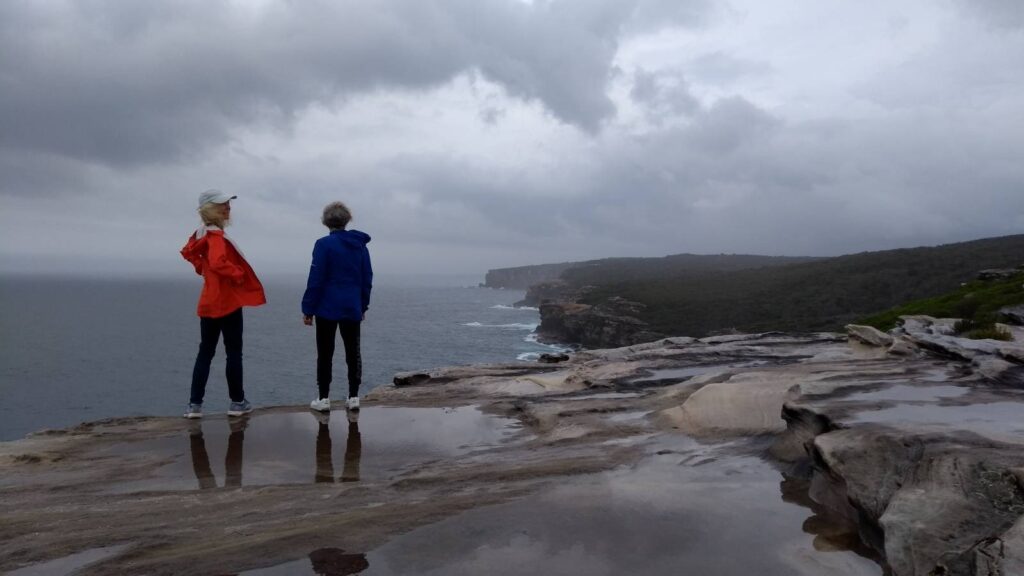
My earliest memories are of Bundeena, a village sitting at the southern most point of Sydney and extending to less than a square mile. To the east and south west are fifty eight square miles of national park; the first national park in Australia, in fact. To the north are a series of beaches washed by Port Hacking Bay. A short walk through the reserve of Jibbon Head brings you easily to the Pacific Ocean. All these natural features limit its expansion. It’s small, remote, sleepily quiet and utterly beautiful.

When my parents first moved us here, Bundeena was dotted with modest fibro and weatherboard houses serving a tiny population. The roads were rough and cars were few. There were two general stores, a village hall, a small shop and milk bar on Horden’s beach, and a three-classroomed primary school. In the surrounding bush, we made dens, swept pathways with ferns and decorated them with stones. Outside of school hours, we roamed free, clambering over rocks, exploring caves and swimming unsupervised. My family was dirt poor but, happily, our entertainment cost nothing.
Now in 2022, the houses are grander and more plentiful, the roads immaculately maintained and the little primary school has expanded beyond those three verandaed rooms. But otherwise, Bundeena is still the place of my childhood, still curtailed by national park and sea, still remote and sleepy, still vulnerable to storms, still wild and magical.
On Monday, we pick up my eldest sister, stock up with food, and drive south over Sydney Harbour Bridge, over Tom Ugly’s bridge, through the southern shires and take the circuitous route through the Royal National Park and around the estuary of the Hacking River. As we cross the low causeway at Audley and head towards Bundeena, I’m reminded of those times when we were grounded by storms: rough seas stopping the ferry that crosses the bay to Cronulla and a swollen river over Audley causeway blocking the only road out. More often than not, the more southerly causeway at Waterfall would be flooded too, so high School children and workers alike would be stranded at home until the storm passed. Bundeena would be literally cut off.
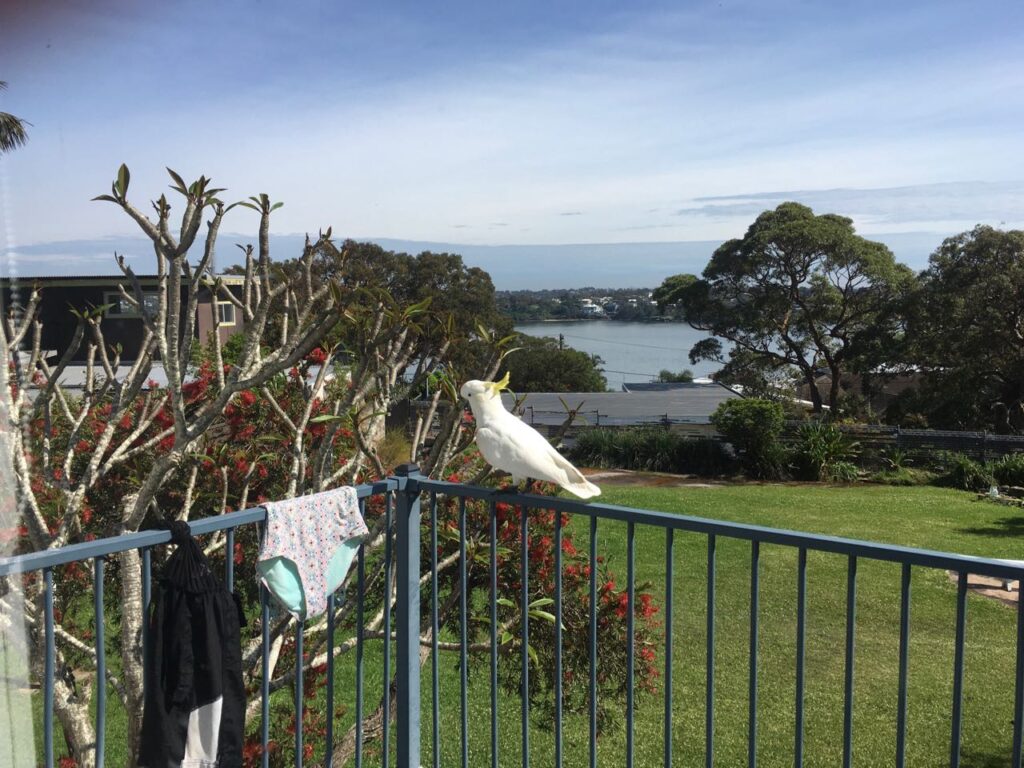
According to Richard, the owner of our accommodation, the Audley causeway has flooded more often this year than ever. Australia, as we’ve already discovered, has had a very wet winter. However, today there’s a bridge at the Waterfall crossing so, although the drive further south is tediously long, residents can at least get out if they need to. This has increased Bundeena’s desirability and properties, if you can find one, now come at a premium.
We finally arrive at our holiday house which is light and spacious with views of Port Hacking Bay through the gum trees. After settling in, we take the short walk to Jibbon Beach and amble along the shore. Jibbon’s the most easterly of the beaches, the most remote from the village centre and there are maybe two other people out walking. As the dusk settles over the water and the waves tumble onto the sand, I take a deep breath and all at once, I’m home. I fit into this environment as into a favourite old coat. It’s as if this place is in my bones.
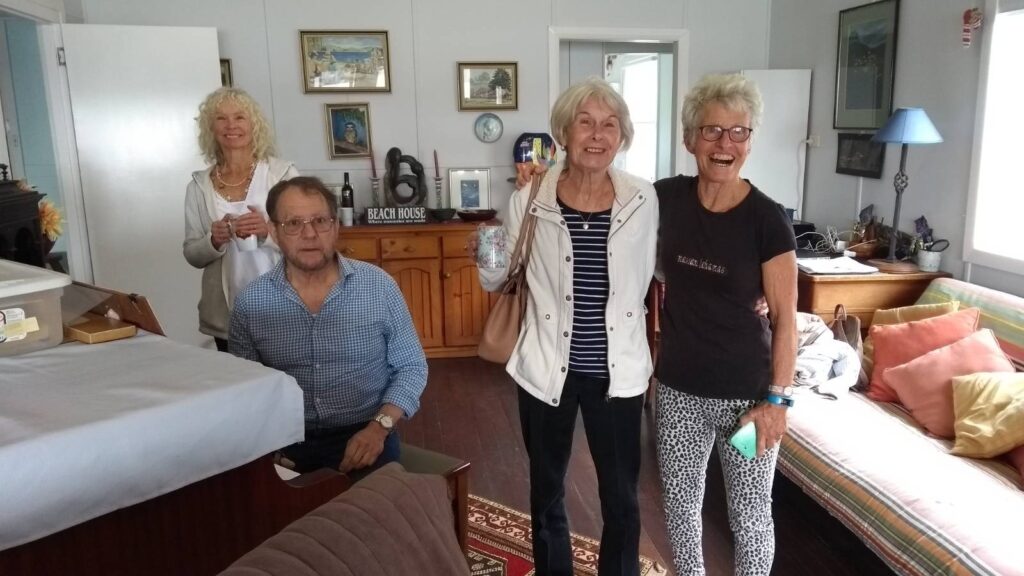
During the week, we catch up with Eleanor and John Keller, who still own their parents’ house on Horden’s beach. I feel as if we’ve known the Keller family forever. Margaret who lived well into her nineties, was a talented artist and generous host; her son, John, a musician like his father. Back in the day, they held regular musical evenings, when John would play Rachmaninov, Chopin and his own competitions; my mother and Margaret would sing and others would play their chosen instruments or recite poetry with mixed results. All the while, the sound of waves on the beach would filter in through the windows. This sound inevitably inspired John’s compositions.
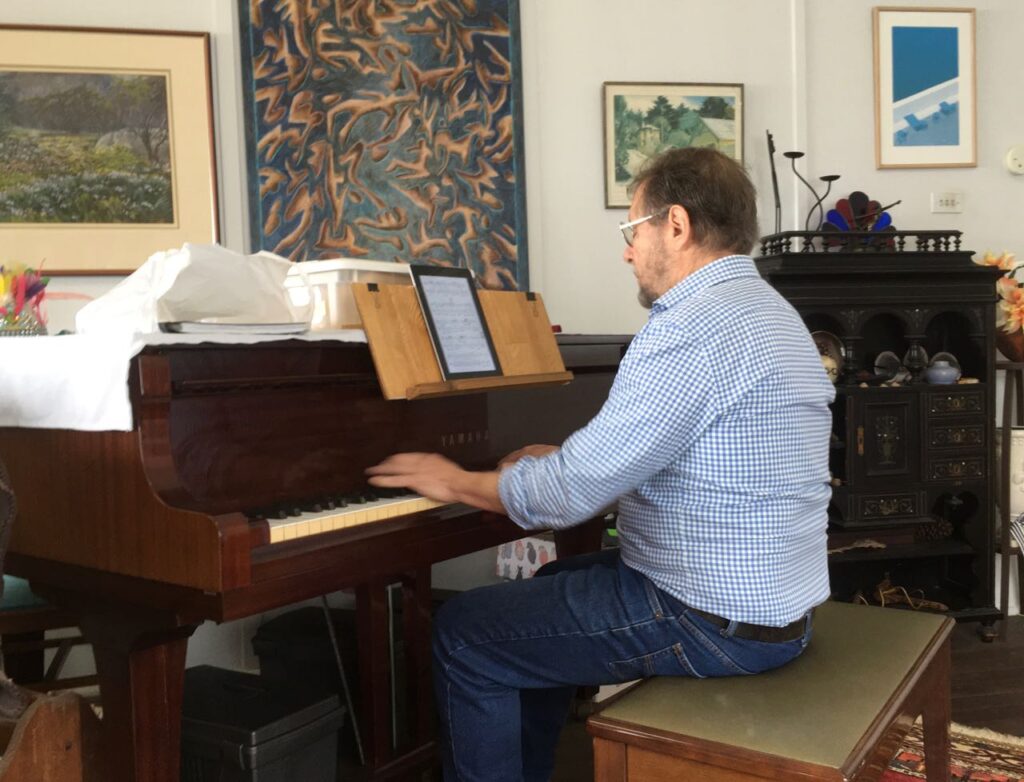
Eleanor greets us with a wide smile and exclamations and takes an immediate interest in all the members of our family. She’s a sportswoman and retired PE teacher and, like her mother, Margaret, is exuberant, generous and energetically positive. Her current sport, we learn, is dragon boat racing. There’s a great deal of talk as my sister and I, Eleanor and John, sit on their verandah and catch up on each other’s lives. It’s been a very long time since I was a child here and the others were teenage friends. We walk through the house, admire paintings and remember various events that took place within its walls.
Then John sits at the piano, plays one of his compositions – Along the Shore – and I’m immediately back in the past, tagging along to the Kellers’ house with my older sisters, lapping up the music and wishing this family were mine. After Eleanor’s delicious lunch, he plays Rachmaninov and then, breaking into one of the pop songs he wrote in the sixties, is astonished to discover that it’s me, and not his sister or Julia, his contemporaries, who knows all the words. They pour out of my head from some childhood cache in an unstoppable unconscious stream. Just like all the other music I heard in this house, they’ve been absorbed via some osmotic process. Of course, the Kellers can’t know just what an impression this family and their music made on me. Like Bundeena itself, their art, music and enthusiasm, crept surreptitiously into my bones.
Oh Joanne- Thank-you for your beautiful writings – expressed from the heart – I so enjoyed reminiscing about our ’growing up’ experiences and your amazing insight and impressions of those times!