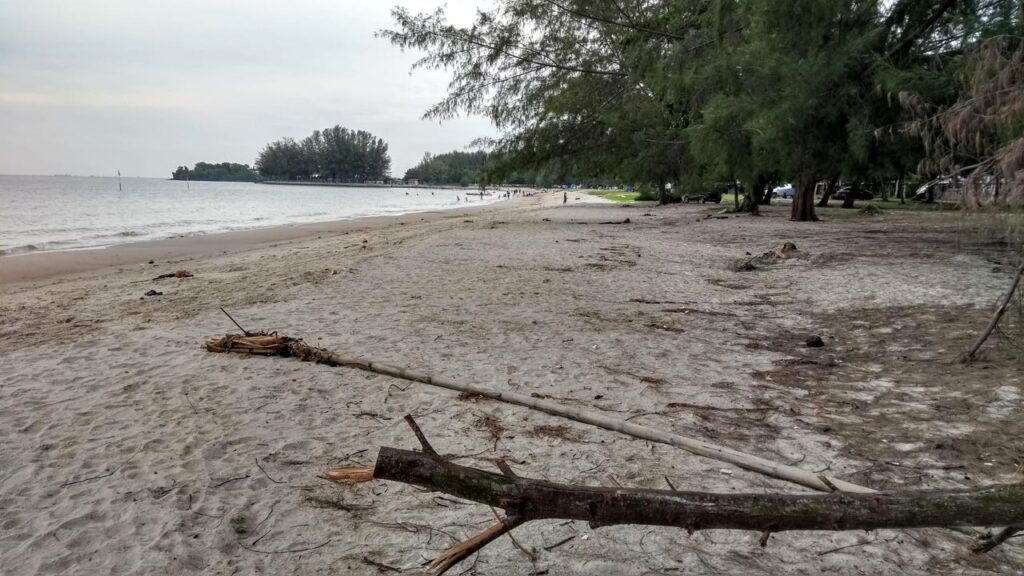
After more than a week, Adrian has seen little that resembles the Malaysia of his childhood so, taking a lead from the Malays, he’s now prepared to leave the past in the past. The Kuala Lumpur that he knew, where he went to school, has been obliterated beneath a thick matting of interlocking highways and towering skyscrapers. But then again, the Alice Smith school still exists and so do other old landmarks, so . . .
The freeway system around KL should, one imagines, keep the traffic moving, but it doesn’t. There are constant traffic jams just as in every other city in the world. But whereas European cities keep their old streets and buildings, the KL highway system is nerve-wrackingly anonymous. With the traffic constantly merging and forking, it’s easy to mistake an exit and this isn’t easily corrected. It means kilometres in the wrong direction, a confusion of spaghetti junctions and, if you manage to pick the right exit next time, kilometres back the way you’ve just come. All in the middle of a very busy city. What’s more, when we do (inevitably) take a wrong exit, both the SatNav and Googlemaps have a complete breakdown and refuse to cooperate any further. We find ourselves laughing hysterically.
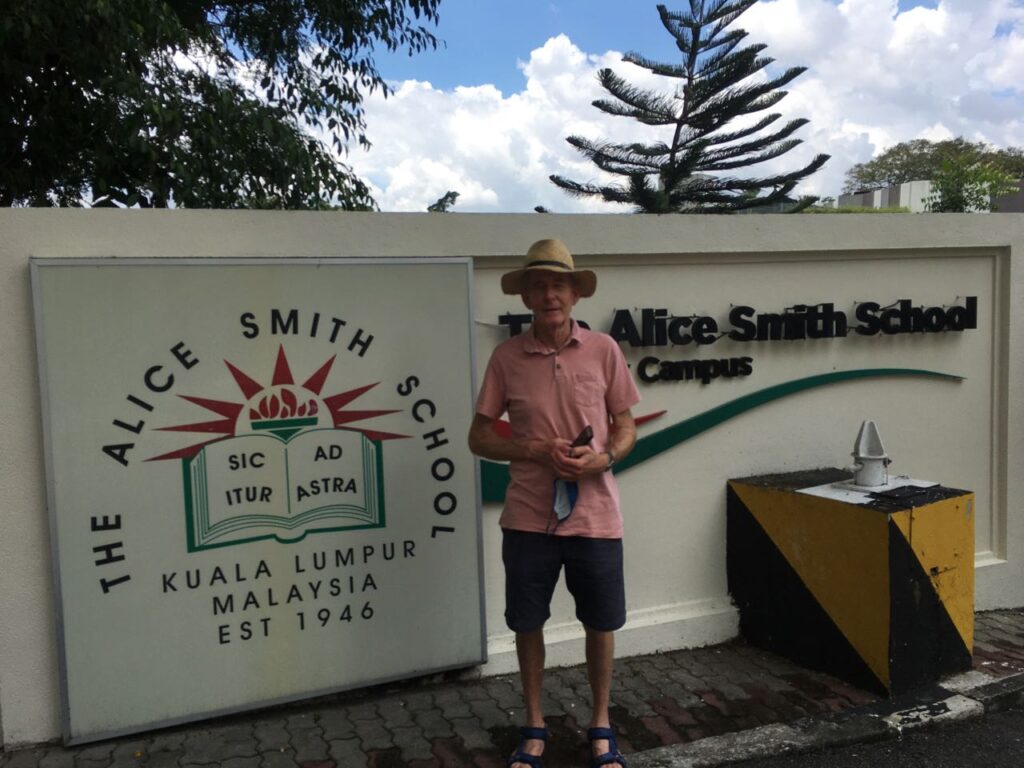
But we’re now on a quieter street and Adrian recognises his surroundings. ‘The school is just along here,’ he says and we go there and there it is: The Alice Smith School where he attended with his brother and sister until the age of ten. It has obviously expanded over the decades and is now surrounded by a high chainlink fence with security guards both front and back, just as every institution in modern Malaysia seems to be.
We pull up and talk to the guards, but they’re not interested in Adrian’s story. They smile and tell us politely to phone, which we’ve already tried without success. But it doesn’t matter. Adrian’s pleased to have finally seen something he recognises. ‘Alice Smith,’ he says, ‘would be amazed at the success of her little school.’ Established in 1946, she never expected it to continue beyond independence.

We return to the freeway system and take a laborious drive to the Lake Club on the edge of the Botanical Gardens where Pam, A’s mother, used to take her children to swim. Again Adrian recognises the approach road and again, there’s a barrier across the entrance and a security guard – ‘Members only, Sir,’ – but in truth, there’s nothing here of the old buildings and grounds of the 1960s anyway. This new sprawling multi-story club has nothing to do with the past. And why should it?
And so the story is repeated – at the Royal Military College at Sungai Besi where the family lived from 1960 and at the original military college in Port Dickson, where they lived from 1953; the places where Harry, A’s father, became the first of the college’s Director of Studies. ‘This is army!’ says the soldier on guard duty, pointing towards the grounds. ‘Yes, I know,’ says Adrian, ‘I used to live here.’
This contemporary Malaysia is perhaps best summed up by the Square, the Padang, in front of the mock-Tudor Royal Selangor Club (once known as the Dog), where cricket matches were once played. It’s now named Dataran Merdeka or Independence Square and sports fountains, monuments and flower beds rather than cricket pitches. This is utterly recognisable to the boy of the sixties, but also utterly Malaysian, it’s British history repurposed. It’s a joyous celebration of the success of this nation and its sixty years of independence. Just as it should be.
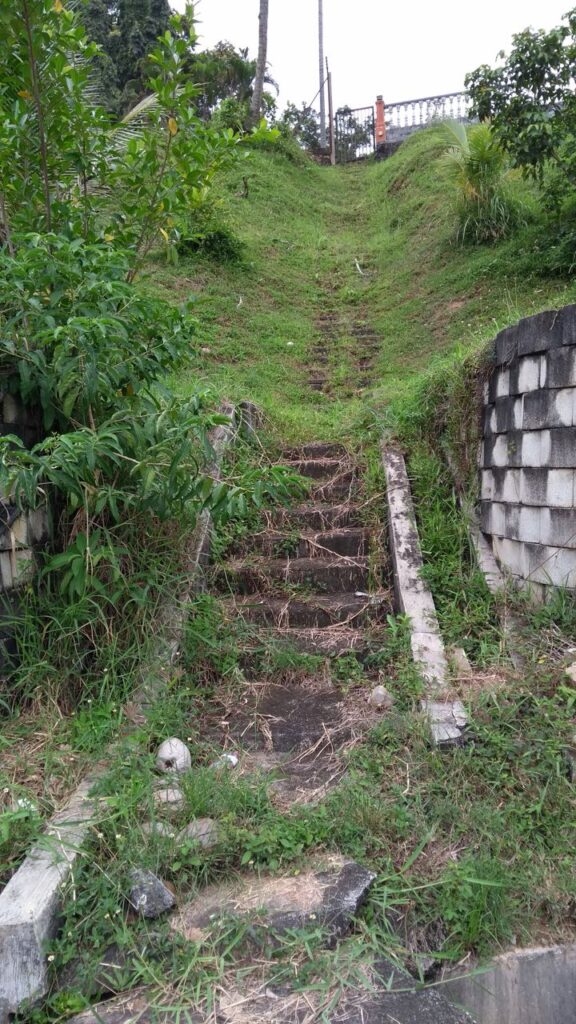
But Adrian does have his moment. At the same time, we both spot the stairs descending from the hill on which the Port Dickson Military College stands, overgrown and disintegrating, but very much still there. These are the steps the Wallwork children used to climb down to the beach, wearing their swimsuits and their rubber rings. We pull up and Adrian climbs the steps one more time, takes photos to send to his brother and sister. ‘They seemed much bigger then,’ Debby replies to his email, but also recognises them. Here at last is tangible proof that their childhood here really did happen, that Adrian’s family did once live in the house on the hill overlooking the sea.